
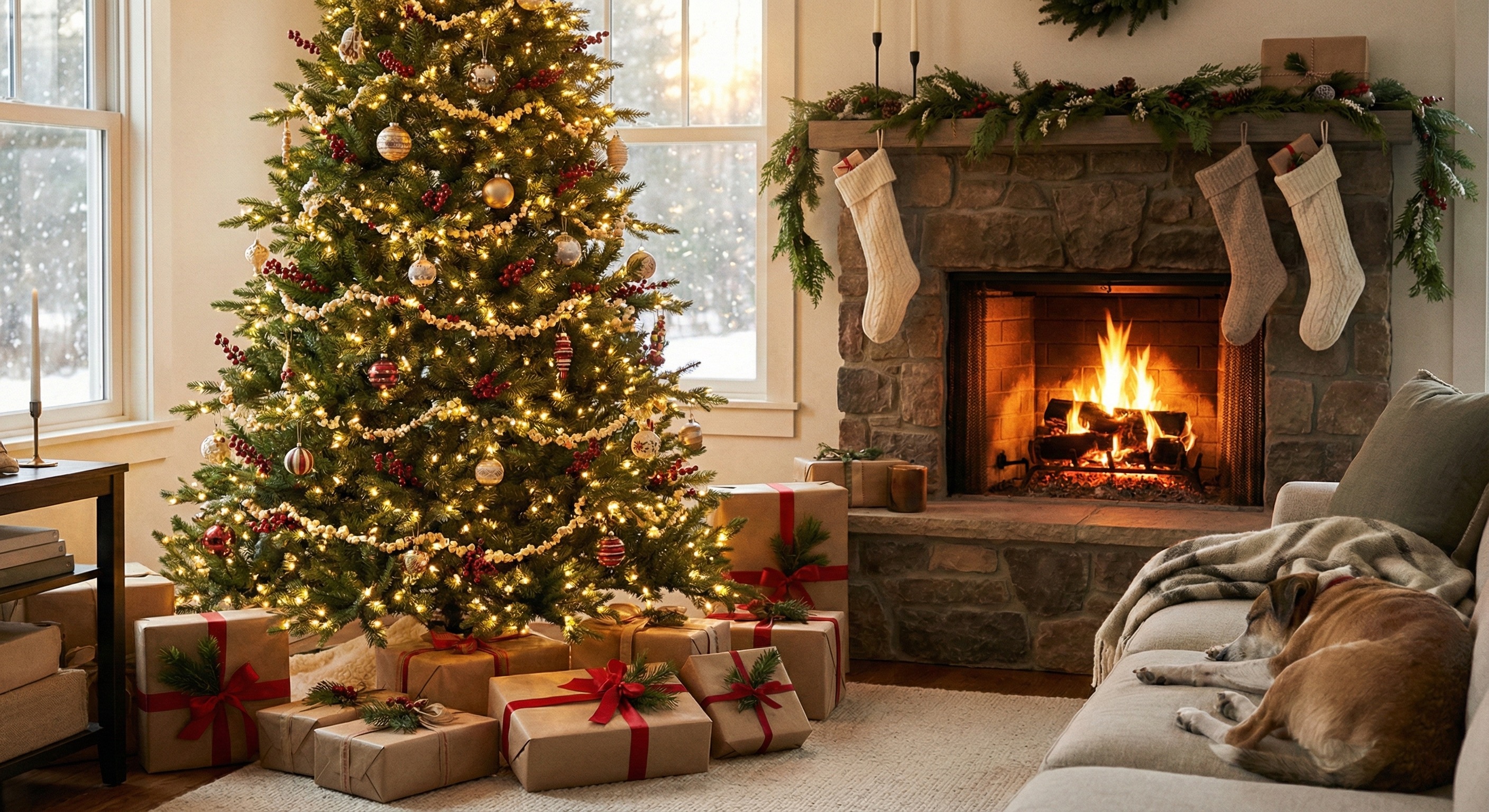
After reviewing over 50 artificial Christmas trees, we have a clear answer to the pre-lit vs unlit debate: for most buyers, a quality pre-lit tree is worth it. The convenience, professional appearance, and improved LED reliability make them the better choice for the majority of households.
Should you buy a pre-lit or unlit tree? For most people, a quality pre-lit tree is the better buy: you get faster setup, cleaner wiring, and a more professional glow for about the same 10-year cost as an unlit tree once you factor in light purchases and your time. Choose unlit only if you care more about customization (smart lights, bulb style, extreme light counts) than convenience.
The key word there is quality. A cheap pre-lit tree will disappoint you regardless of LED technology. And if you want full control over your lighting—color temperature, smart features, specific bulb styles—unlit remains a legitimate choice.
Let's dig into the details.
What Does "Pre-Lit" Actually Mean?
- Pre-Lit Christmas Tree
An artificial Christmas tree with lights permanently installed on branches during manufacturing. The lights are wired through the tree's internal structure and connect automatically when you assemble the tree sections—no manual stringing required.
When you buy a pre-lit tree, the lights are already attached to individual branches and wired through the center pole. Modern pre-lit trees use Quick Set or EZ Connect technology, where each tree section plugs into the next automatically as you stack them. You literally just assemble the tree, plug it in, and the lights work.
Types of Pre-Lit Lighting Systems
Not all pre-lit trees are equal, and the type of lights matters more than you might think.
Incandescent lights are the old standard—that classic warm glow that's hard to replicate. But they run hot, use more energy, and fail more often than LEDs. You'll still find them on budget trees, but they're increasingly niche. If nostalgia for that specific light color matters to you, they exist. Otherwise, skip them.
LED is the modern default on any tree worth buying. They last dramatically longer than incandescent, run cool to the touch, and use a fraction of the electricity. The main variable is color temperature—cheap LEDs often skew cool and bluish, while quality LEDs (like those on the Yorkshire Fir) nail that warm white glow without the downsides of incandescent.
Micro-dot and fairy LEDs take it a step further. The bulbs are tiny—almost pinpoint—and the wiring is so thin it nearly disappears into the branches. The effect is less "string of lights" and more "the tree itself is glowing." Trees like the Grand Duchess use this technology, and the difference is immediately visible compared to trees with chunky traditional bulbs.
Smart/app-controlled lights add Bluetooth or Wi-Fi connectivity for app control, music sync, color changing, and scheduling. The Melody Spruce is an example. These are specialty products—fun if you want a party tree or smart home integration, but overkill for most buyers.
Are Pre-Lit Christmas Trees Worth the Extra Money?
For most buyers, yes—with caveats. Here's the honest breakdown.
The Real Cost Over 10 Years
Why 10 years? According to a 2021 Nielsen survey reported by TIME, three-quarters of Americans who buy artificial Christmas trees intend to use them for five years or more, and nearly half plan to keep theirs for at least ten seasons. So 10 years is a realistic planning horizon for a quality tree.
Pre-lit trees cost more upfront—typically $100-200 more than equivalent unlit models. Whether that premium pays off depends on what you're comparing.
Unlit tree costs over time (assuming quality components):
- Tree: $200-400
- Quality LED string lights (3 sets for good coverage): $80-150
- Replacement lights every 4-6 years (tangling, damage, storage issues): $50-100
- 10-year total: $330-650 + 10-15 hours of setup time
Pre-lit tree costs over time:
- Tree with integrated LEDs: $300-600
- Potential supplemental string if a section fails after warranty: $0-40
- 10-year total: $300-640 + 2-3 hours of setup time
These estimates assume decent-quality trees and pro-grade LED strings. Bargain-bin lights will cost less upfront but need replacing more often.
The math favors pre-lit when you factor in time. Stringing lights takes 60-90 minutes annually. Pre-lit setup? 15-30 minutes. Over 10 years, that's 8-12 hours saved.
What Pre-Lit Gets You That DIY Can't Match
If you've ever tried to string lights on an artificial tree, you know the frustration: you wrap them around the outside of the branches, step back, and the tree looks... fine. Maybe good. But not great. There's something flat about it—the lights sit on the surface instead of glowing from within.
That's the fundamental difference with a quality pre-lit tree. The lights are wired through the branches, positioned at varying depths from the trunk to the tips. When you plug it in, you get that dimensional glow—light emanating from deep inside the tree, not just decorating its surface. It's the difference between a tree that looks professionally styled and one that looks like someone wrapped it in lights (because you did).
The wiring situation varies by tree. Some brands do this better than others—the Elegant Grand Fir, for example, uses micro-dot LEDs with wiring so thin it genuinely disappears into the branches. Other trees have more visible wiring, which is fine; you're still not dealing with green extension cords spiraling around the outside like you would with DIY stringing.
Factory placement also means secure, consistent positioning you can't replicate by hand. Manufacturers use clips and tight wrapping techniques to keep bulbs exactly where they want them—so lights don't shift or droop over time. The Grand Duchess has 2,250 LEDs positioned to eliminate dark spots, and they'll stay positioned that way for years. Try achieving that level of precision with string lights at 10pm on a Saturday when you just want the tree done. And built-in controls (foot pedals, remotes, timers, dimmers) mean you're not crawling behind the tree every time you want to turn it on.
How Long Do Pre-Lit Tree Lights Really Last?
This is the question everyone asks, and the honest answer is more complicated than most manufacturers want to admit. You'll see claims like "50,000 hours" and "lifetime LEDs" thrown around, and while those numbers aren't technically false, they're also not the whole story. The lights on your tree will probably outlast several other components—and understanding what actually fails will save you from unrealistic expectations.
The Specs vs Reality
LED bulbs are typically rated for 20,000-25,000 hours—manufacturers often market this as "15+ holiday seasons." On paper, that math works: 8 hours/day × 45 days = 360 hours/season, so 25,000 hours would be 69 seasons.
But the LED chip isn't usually what fails. The real limiting factors are:
- Wiring and connectors — Corrosion, loose connections, and mechanical stress from setup/takedown
- Transformers — The power supply can fail before the LEDs
- Physical damage — Storage accidents, pets, ornament hooks catching wires
Professional installers and lighting suppliers estimate that LED Christmas light strings typically last around 6-7 seasons in real-world use. For a home pre-lit tree used 45 days/year and stored carefully, 6-10 seasons is a reasonable expectation—with the upper end assuming gentle handling and ideal storage conditions.
What Warranties Tell Us
Manufacturers know their products won't last forever, so they put real numbers on how long they'll stand behind defects in the lights and tree body.
- Balsam Hill: 3-year limited warranty covering frame, foliage, stand, hinges, and factory-installed lights—but not burned-out bulbs, which they treat as normal wear and tear
- National Tree Company: 3-year warranty on 6.5ft+ trees for manufacturing defects, plus 2-year light warranty for incandescent and 3 years for low-voltage LED
- Big-box premium lines (Home Depot, Lowe's): Many better pre-lit trees advertise 3-year tree/light warranties for manufacturing defects
None of these warranties mean "your bulbs will never burn out for three years." What they really say is: if there's a defect in how this tree or light system was built and it shows up in the first few seasons, we'll repair or replace the defective parts.
That's why we think in terms of 6-7 seasons as typical for light strings in real-world use, with higher-quality pre-lit trees often lasting 8-10 seasons or more with gentle handling and good storage—not "20+ years of perfect lights."
The Incandescent Horror Stories Are Real—But Dated
If you've heard someone swear they'll never buy a pre-lit tree again, they probably bought one between 2000 and 2012. And honestly? They're not wrong about that tree.
Incandescent pre-lit trees were genuinely problematic. The bulbs ran hot, which degraded the wiring over time. They used series wiring, so one dead bulb could take out an entire strand—and finding the culprit meant testing bulbs one by one with a voltage detector or just... guessing. Replacement bulbs were sold separately, often in the wrong size, and the tiny prongs bent if you looked at them wrong. After two or three seasons of this, most people gave up and bought an unlit tree. Smart move, at the time.
But modern LED pre-lit trees are engineered completely differently. They run cool, so the wiring isn't slowly cooking itself. They use parallel wiring, so a dead LED doesn't affect its neighbors. And individual bulbs rarely fail anyway—what goes wrong is usually a connector or transformer, not the LEDs themselves. If your reference point for pre-lit trees is a Target special from 2008, it's worth updating your mental model.
Pre-Lit vs Unlit: Cost, Time, and Hassle Compared
| Factor | Pre-Lit | Unlit |
|---|---|---|
| Setup time (yearly) | 15-30 minutes | 60-120 minutes |
| Upfront cost (7.5 ft) | $300-800 | $150-500 |
| 10-year total cost | $300-640 | $330-650 |
| Lighting effect | Interior + exterior glow, factory-even spacing | Exterior unless you weave lights deep |
| Customization | Limited to built-in color/modes | Any bulb style, color temp, density |
| Smart home integration | Only certain trees with smart systems | Any smart string (Govee, Twinkly, etc.) |
| Repair approach | Section-based warranty replacements; trickier DIY | Replace individual strings; simple to swap |
| Storage hassle | No loose lights to store | Multiple strings; tangling risk |
| If lights fail badly | Tree often replaced (or overlay new strings) | Tree body lasts decades; only strings replaced |
When Should You Choose a Pre-Lit Christmas Tree?
Pre-Lit Trees
Pros
- Save around an hour of setup every year
- Professional interior glow effect
- Hidden wiring and built-in controls
- No tangled light storage headaches
Cons
- Higher upfront cost ($100-200 more)
- Can't change light color/style without overlay
- If lights fail out of warranty, options are limited
Bottom line: Pre-lit is the right call if you value your time, want that professional glow, and plan to keep the tree 5+ years. Skip it if you need smart home integration or specific bulb styles.
When Should You Choose an Unlit Christmas Tree?
We focus on pre-lit trees because after reviewing 50+ artificial trees, we believe they're the right choice for most buyers. But unlit has legitimate advantages:
Unlit Trees
Pros
- Full control over bulb style, color temp, and smart ecosystem
- Easy to change your look year to year
- Tree body can last decades—only replace strings
- Easier to go maximalist with 2,500-3,000+ lights
Cons
- 60-120 minutes of stringing every year
- More visible wiring unless you're meticulous
- No interior branch wiring 'glow from within'
- Storage and untangling headache for multiple strings
The real draw of unlit is customization: fairy lights, Govee smart strips, C7/C9 vintage bulbs, exact color temperature, smart home integration with any ecosystem. If you want 3,000+ lights on a 7.5ft tree or to experiment with different looks each year, unlit is the only way.
Pro tip for unlit buyers: Even if you're using regular string lights, a $15 smart plug turns any tree into a "smart" tree. Set schedules, control it from your phone, or just say "Alexa, turn on the tree." You don't need fancy smart lights to get the convenience factor. (I have about eight of these scattered around our house—trees, garland, Scentsys, you name it.)
The environmental/longevity argument:
I've had multiple pre-lit trees die after 3-4 years when the lights failed. Meanwhile, my parents have had the same unlit artificial tree for over 20 years, just swapping out string lights as needed.
There's something to this. If light failure means throwing away an entire PVC/PE frame, that's wasteful. An unlit tree body can last decades while you just replace strings. We'd counter that LED failure rates are much lower than incandescent—and you can always overlay new strings on a pre-lit tree whose lights have partially failed—but the point is valid.
And if you genuinely enjoy stringing lights as part of your holiday tradition, that's a perfectly good reason to go unlit. The process can matter as much as the result.
What Reddit Gets Right (and Wrong)
We see the same arguments in every Reddit thread about pre-lit vs unlit. Here's our take:
"Pre-lit lights always fail within 5 years"
Verdict: Mostly outdated, but not entirely wrong. This was absolutely true for incandescent pre-lit trees. With modern LED trees, light failure is far less common—especially on midrange and premium models. But "far less common" isn't "never," which is why manufacturers still offer 2-3 year warranties. Quality matters enormously here.
"You can't fix them when they break"
Verdict: Partially true, but overstated. Modern trees use sectional wiring—if one section fails, only that section goes dark, not the whole tree. Some manufacturers (National Tree, Balsam Hill) have sent replacement sections to customers under warranty, though it's handled case-by-case, not as a standard part you can order. What kills whole sections is usually bad connections or transformer failure, not individual LEDs. And worst case, you can always overlay string lights on the problem section.
"Unlit trees are way cheaper"
Verdict: Upfront, yes. Long-term, it depends. Factor in quality string lights ($80-150), replacement every few years, and the time cost of stringing, and pre-lit often breaks even over 5-10 years. But if you're buying budget strings and don't value your time highly, unlit is genuinely cheaper.
"You get more control with unlit"
Verdict: Absolutely true. This is the one unambiguous advantage of unlit. You can choose exact color temperature, bulb style (C7, C9, fairy, Edison), smart features (Govee, Twinkly, LIFX), and light density. If customization matters to you, unlit delivers in ways pre-lit can't match.
"Pre-lit trees are for lazy people"
Verdict: Gatekeeping nonsense. Professional decorators use pre-lit trees. Valuing your time isn't laziness—it's efficiency. That said, if you genuinely enjoy the ritual of stringing lights, that's valid too. It's about what you value, not about effort.
Quality Matters More Than Pre-Lit vs Unlit
Here's what we've learned from testing dozens of trees: a cheap pre-lit tree will fail regardless of whether it has LED or incandescent lights. The bigger divide isn't pre-lit vs unlit—it's quality vs cheap.
What to Look For in a Pre-Lit Tree
UL or ETL certification is non-negotiable. This indicates the electrical components have been tested and meet safety standards. If you don't see that label, you're gambling on whether the wiring was done correctly—not worth it for something that'll be plugged in near a dry tree for 45 days.
A 2-3 year light warranty tells you the manufacturer is confident in their product. If they won't stand behind the lights for at least two years, ask yourself why. Balsam Hill offers three years, National Tree offers two to three depending on LED type, and Home Depot's premium lines typically include three-year coverage. Anything less is a red flag.
Replacement section availability is worth checking before you buy. On some midrange and premium trees, the manufacturer can ship you a replacement section if part of the tree fails under warranty. Brands like Balsam Hill, National Tree, and GE have all done this for customers—but it's handled case-by-case through customer service, not as a "buy a new middle section anytime" option. Once you're out of warranty, most brands will tell you to overlay new string lights or replace the tree. Check reviews and warranty fine print to see how the brand actually handles failed sections.
LED type matters more than you'd think. Micro-dot and fairy LEDs typically use higher-quality components and thinner wiring than cheap mini-LEDs, which means better reliability and a cleaner look. The Elegant Grand Fir uses microdot LEDs with nearly invisible wiring—the difference is immediately noticeable compared to budget trees with chunky bulbs.
Understand how repairable the lights are. This varies more than you'd expect. On some pre-lit trees, the lights are essentially standard strings clipped to the branches—bulbs are replaceable, and you can even remove an entire strand and run a new one if needed. On highly integrated micro-dot and fairy-lit trees, the LEDs are soldered onto fine wire that's built into the branches; individual bulbs and strands aren't realistically replaceable. In those cases, brands may send a replacement section under warranty, but out of warranty the usual fix is overlaying a new set of lights. Before you buy, skim the product page or manual for phrasing like "replaceable bulbs" or "non-replaceable LEDs"—that tells you a lot about how fixable the tree will be in year five.
Red Flags
Avoid no-name brands with no warranty information, suspiciously low prices ($150 for a 7.5ft pre-lit means corners were cut), missing UL/ETL listings, and customer reviews mentioning light failures in year 1-2.
What to Do If a Pre-Lit Section Goes Dark
Don't panic—and don't assume the tree is dead. Here's the troubleshooting sequence:
1. Check connections first
Most "failures" are user error. Ensure each section is fully seated in the pole and any connection plugs are firmly connected. Check any inline fuses in the plug (usually replaceable).
2. Contact the manufacturer if under warranty
Brands like National Tree, Balsam Hill, and Home Depot have shipped replacement sections to customers under warranty—it's handled through customer service, not as a part you order online. The process is usually: prove purchase, identify the failed section, make your case. It's not guaranteed, but it's worth asking before you write off the tree.
3. Out of warranty? Overlay it
If a section fails after warranty, the simplest fix is running a separate string of lights over that section. It's not perfect, but it's functional and extends the tree's life.
A Note on Safety
LED strings run cooler than incandescent, reducing fire risk. Look for flame-resistant PVC/PE materials and UL/ETL certification. Most pre-lit trees draw only 30-60W, well within standard extension cord limits—just don't daisy-chain multiple trees on one outlet.
Our Top Pre-Lit Recommendations
We've tested dozens of pre-lit trees. Here are our top picks:
Best Overall: Yorkshire Fir
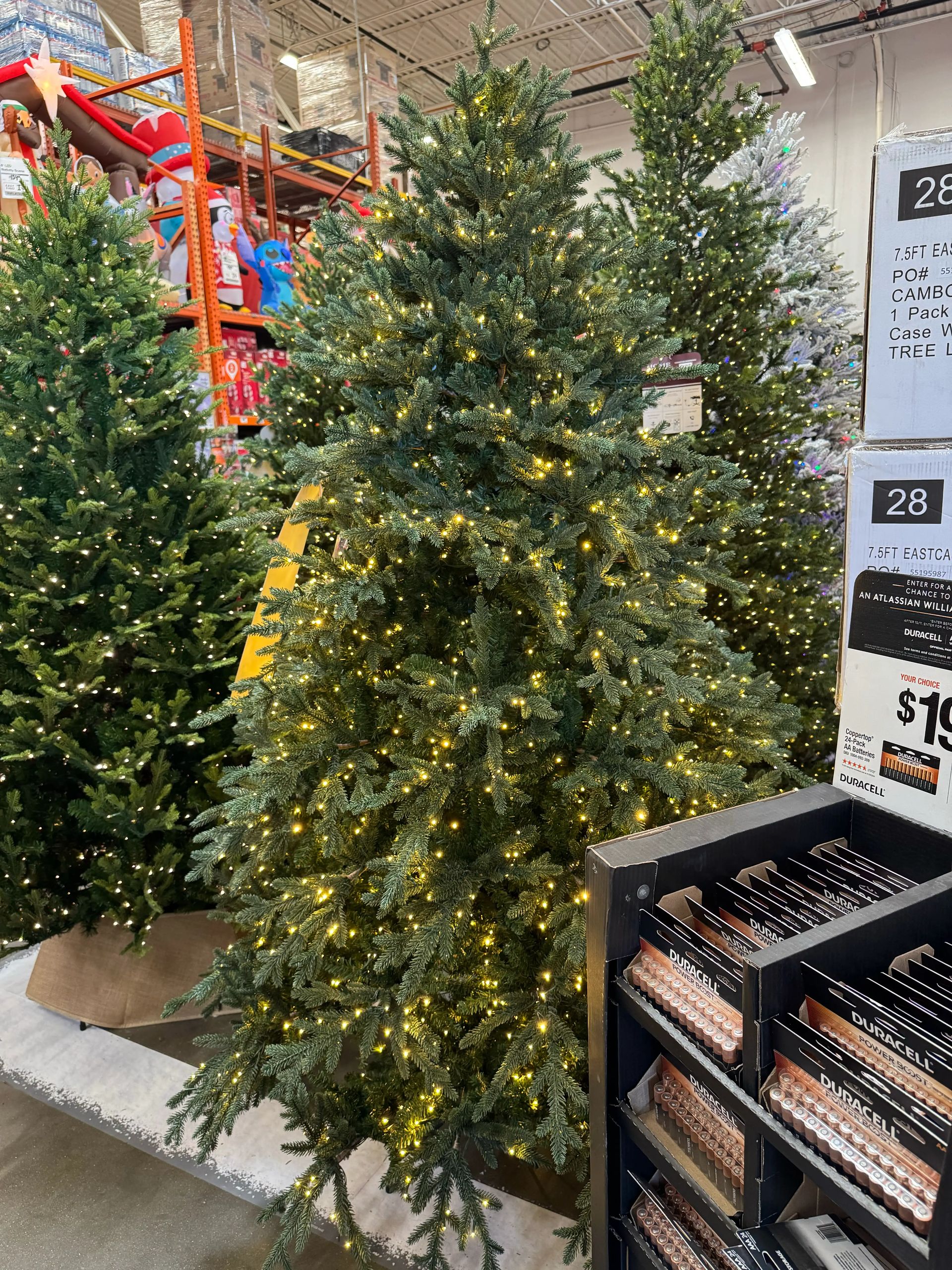
The Yorkshire Fir beats the viral Grand Duchess in head-to-head comparisons. It has true warm white LEDs (not the cool-toned whites that plague cheaper trees), 69% PE needles for realistic texture, and memory wire branches that minimize annual fluffing. The 2,000 micro fairy LEDs offer 11 lighting functions with 5-level dimming.
Best Value: Grand Duchess
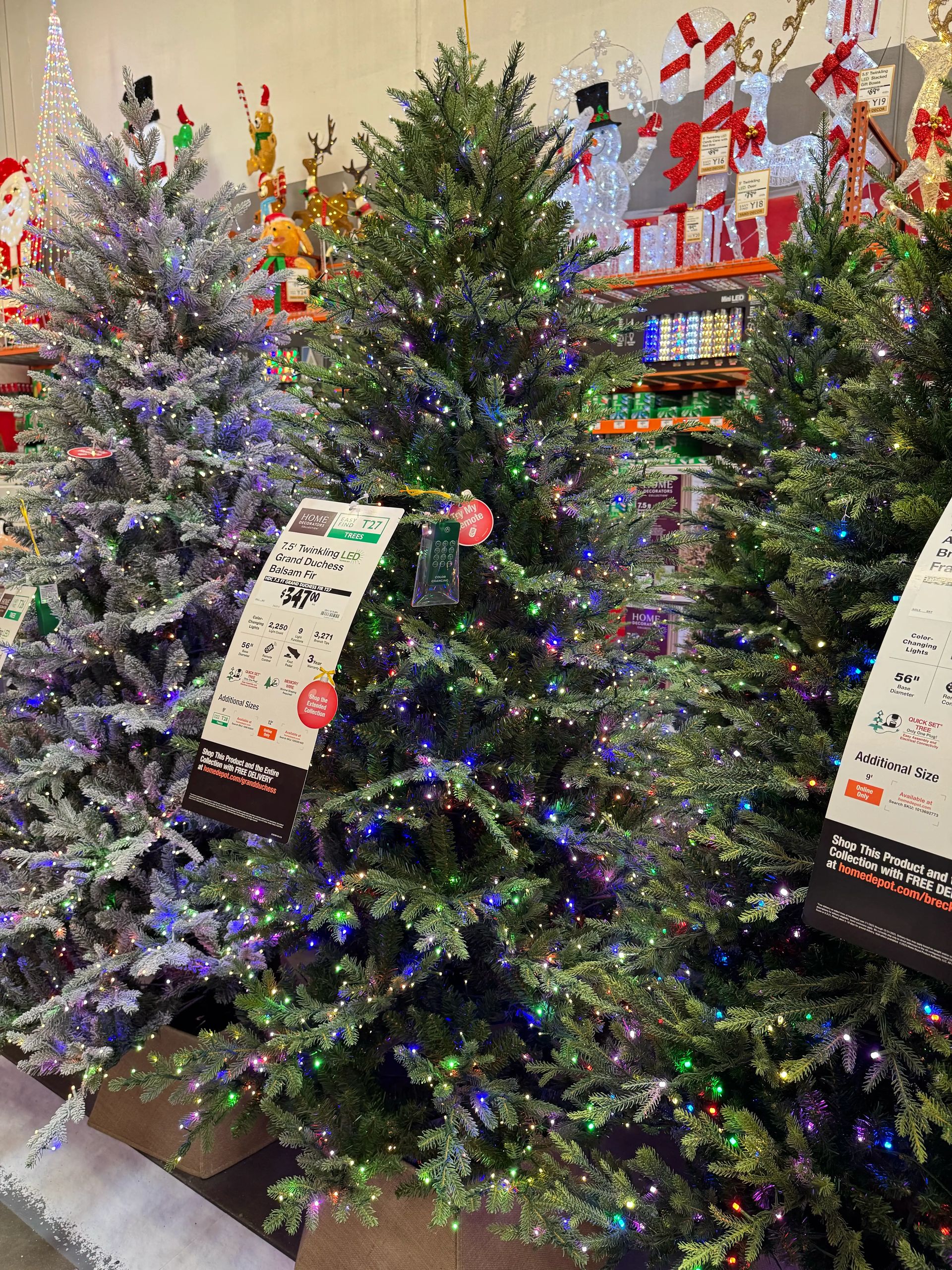
Home Decorators Collection Grand Duchess Twinkling Balsam Fir
The viral tree that took over social media—and for good reason. At 2,250 LEDs, it has the best light count at this price point, with dual-color capability (warm white and multicolor) and Quick Set technology for automatic connections. Often under $400 during sales. One caveat: the lights run slightly cooler than the Yorkshire. If true warm white matters to you, spend up.
Best Budget: Birchwood Fir
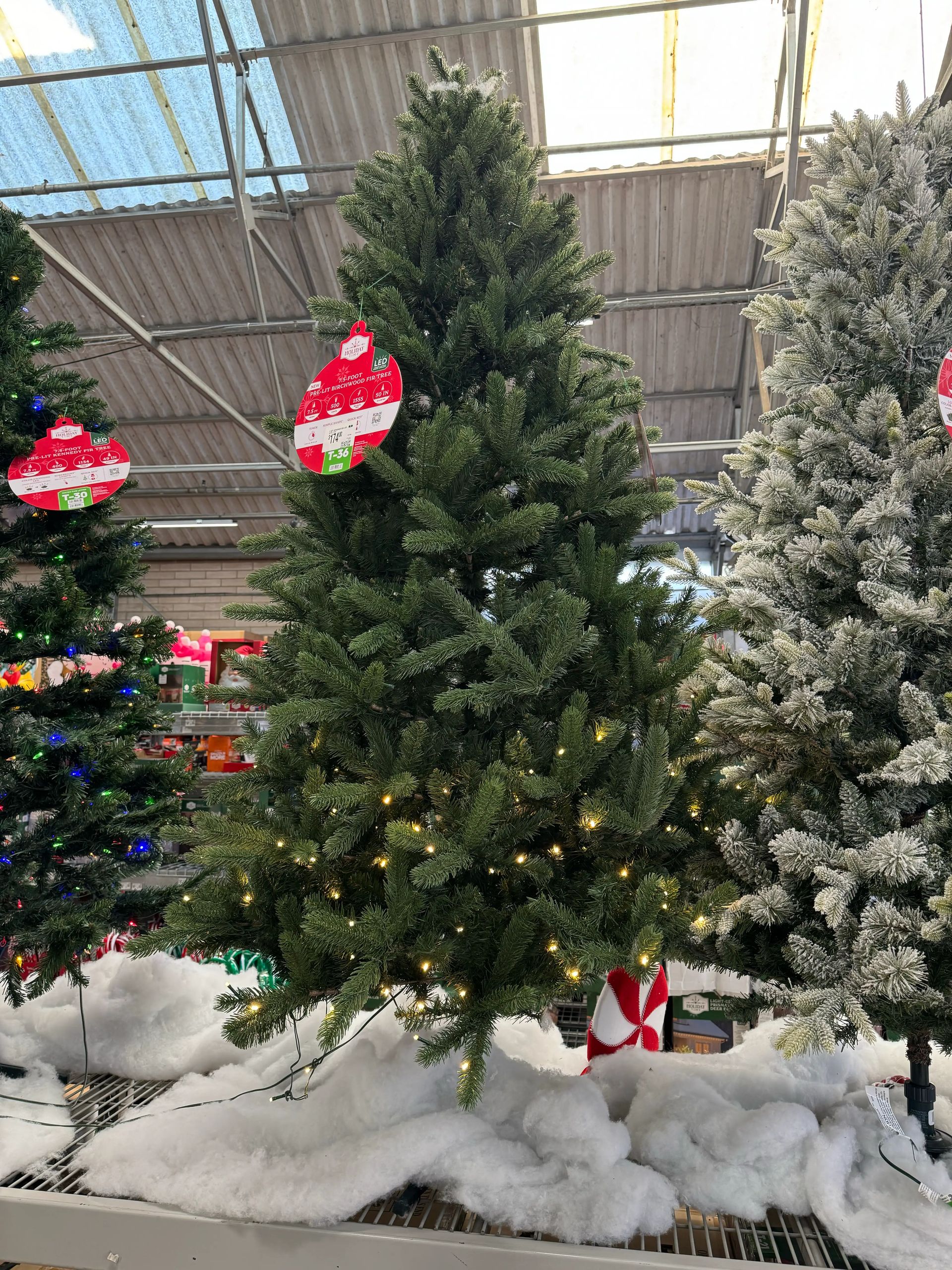
Premium features at budget pricing. You get Quick Set technology (usually reserved for $400+ trees) and memory wire branches, plus 500 warm white LEDs with a twinkle effect—all for under $200.
Best Premium: Vermont White Spruce
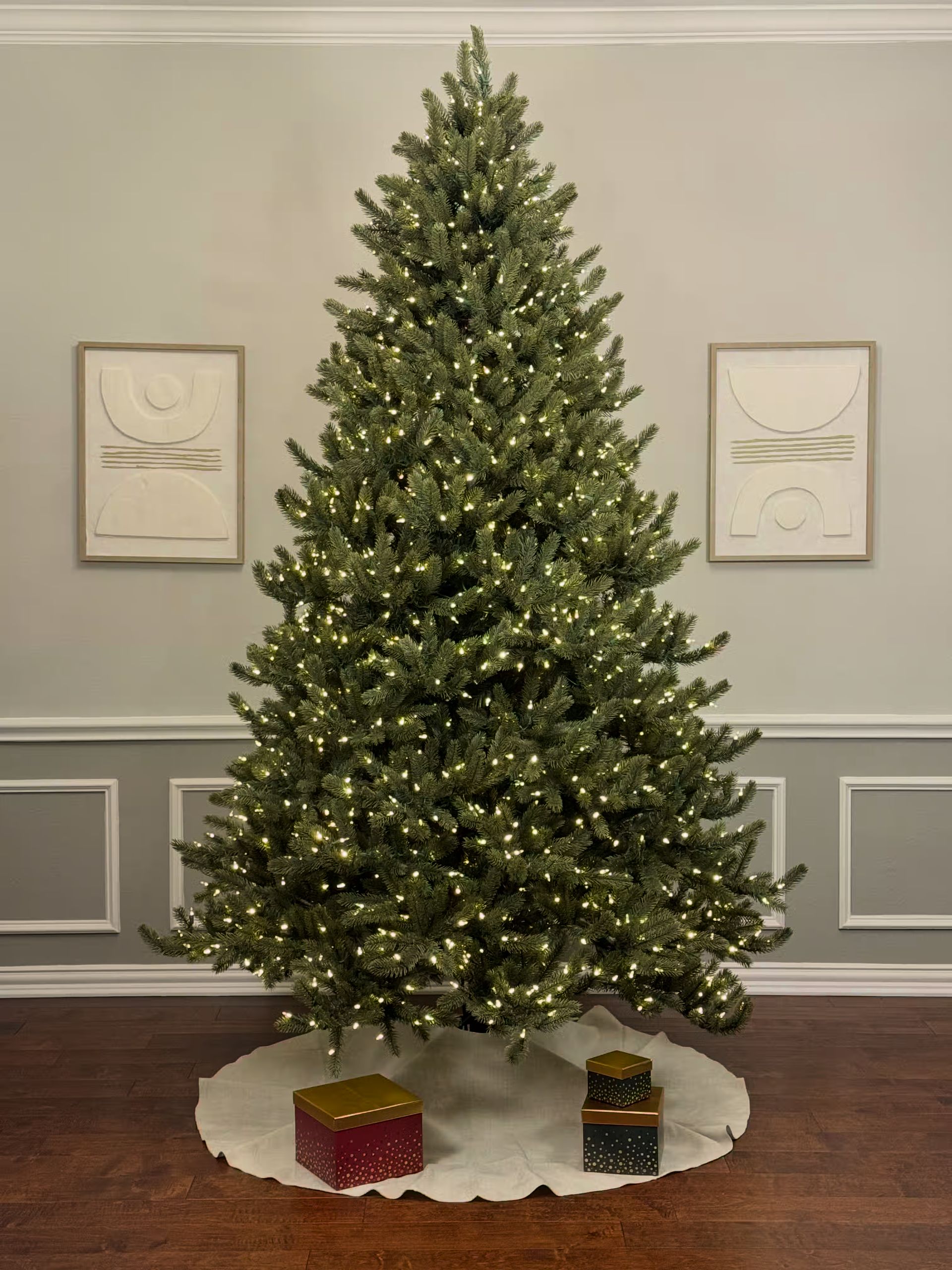
For those who want the absolute best. The 70% PE needle mix delivers the most realistic texture available, with Color+Clear dual-mode lighting (warm white, multicolor, or both) and exceptional branch construction—three sub-branches per branch for natural depth. This is 10+ year investment quality, though it requires 2-4 hours of serious fluffing to look its best.
FAQ
What does pre-lit mean on a Christmas tree?
Pre-lit means lights are permanently installed on the branches during manufacturing. When you assemble the tree, the lights connect automatically through internal wiring. No manual stringing required—just plug in and enjoy.
Are pre-lit Christmas trees worth the extra money?
For most buyers, yes. The upfront premium ($100-200) is offset by time savings (1-2 hours annually), no need to buy separate lights, and the superior look of interior branch lighting. Quality matters enormously—buy from reputable brands with 2-3 year light warranties.
How long do pre-lit Christmas tree lights really last?
LED bulbs are rated for 20,000-25,000 hours, but real-world tree lifespan depends on wiring, connectors, and storage conditions. Expect 6-10 seasons on a quality tree with careful storage—professional installers typically see 6-7 seasons on commercial strings. Manufacturers warrant lights for 2-3 years, which reflects realistic failure rates.
Can you add more lights to a pre-lit tree?
Yes, many people add supplemental string lights for extra sparkle or to achieve a more maximalist look. The pre-lit base provides consistent interior lighting, and you can wrap additional lights around the exterior.
What happens when a pre-lit tree's lights stop working?
First, check connections—most "failures" are user error (sections not fully connected, blown fuse). If a section genuinely fails, modern trees use sectional wiring so only that section goes dark. Contact the manufacturer for replacement sections if under warranty. Out of warranty, overlay string lights on the affected section.
Can you replace lights on a pre-lit Christmas tree?
On most modern trees, individual bulbs aren't meant to be replaced—but you don't need to. LED bulbs rarely burn out individually. What fails is usually wiring or connectors, which is why sectional replacement (rather than bulb replacement) is the standard repair approach.
Should I buy a pre-lit or unlit artificial tree?
Pre-lit for most buyers who value convenience and professional appearance. Choose unlit if you want full control over light style (smart lights, specific bulb types, exact color temperature), extreme light density (3,000+ on a 7.5ft tree), or genuinely enjoy the stringing process.
Do pre-lit trees use a lot of electricity?
No. LED pre-lit trees are energy efficient. Independent estimates put 100 LED lights at about 5-10 watts—so a typical 7.5ft tree with 1,500-2,000 LEDs draws roughly 50-150 watts depending on LED type and controller. Running 8 hours/night for 45 days uses about 18-54 kWh—roughly $3-8 in most US electricity markets.
What should I look for in a quality pre-lit tree?
UL or ETL certification, 2-3 year light warranty, and LED type (micro-dot/fairy LEDs typically indicate better quality). Check reviews to see how the brand handles warranty claims—some will ship replacement sections, others won't. Avoid no-name brands with suspiciously low prices or no warranty information.