
Buying Guide: What to Look For
Our opinions are our own. We may earn a commission if you buy through our links. How this works
The complete walkthrough—from understanding specs to timing your purchase. Everything you need to know before buying. We cover what actually matters (and what's just marketing) so you don't waste time on specs that don't affect how your tree looks or lasts.
TL;DR
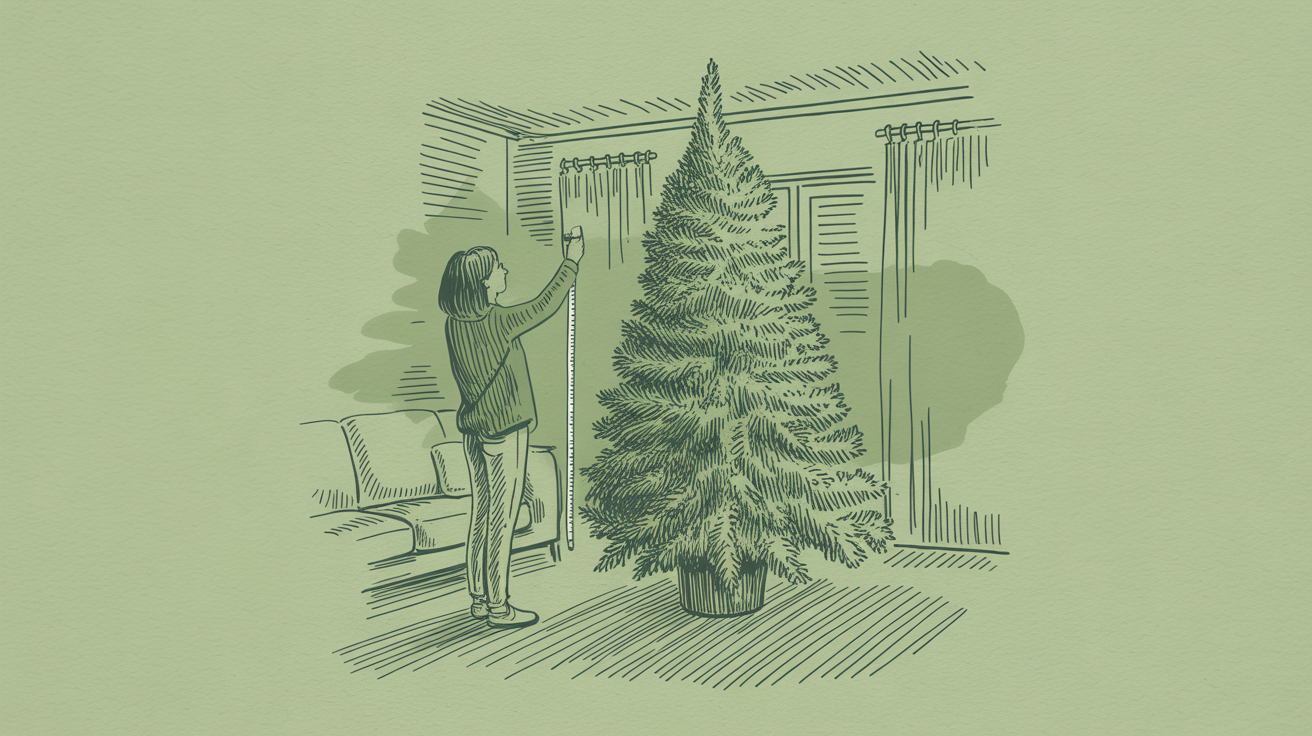
- Size matters more than you think: Subtract 12" from your ceiling height for a tree with a topper, or 6" without one. Measure your space before you fall in love with a tree.
- PE percentage = realism: 50%+ PE looks good from across the room, 70%+ looks great up close. 100% PE is gorgeous but expensive.
- Light count creates the vibe: On a 6- to 10-foot tree, 100+ lights per foot = dense magical glow. 70-90 per foot = classic Christmas look.
- Control systems vary wildly: App control is cool but can be finicky. Foot pedals are underrated for families with kids.
- Buy in January if you can: Post-holiday sales are real. Premium trees drop 30-50% off retail.
What Actually Matters (And What's Just Marketing)
Let's be honest: artificial tree shopping is overwhelming. Every brand claims theirs is the "most realistic," "easiest to assemble," and "best value." Here's what actually affects how your tree looks, how long it lasts, and whether you'll curse its existence every December. Still deciding whether to go artificial at all? Our real vs fake Christmas tree comparison weighs the cost, carbon, and fire risk of each. If you're shortlisting brands first, our guide to the best Christmas tree brands shows what each one does well and why the specific tree matters more than the label.
Size and Fit
Height: Measure floor to ceiling, then subtract 12 inches for a topper or 6 inches without one. Every brand we found that says how it measures includes the stand in the listed height, so don't subtract it again. If you love dramatic 10" toppers, subtract the topper's height plus 6 inches.
Quick reference:
- 8' ceilings → 7' tree with a topper, 7.5' without
- 9' ceilings → 7.5-8' tree
- 10' ceilings → 9' tree
- 12' ceilings → 10' tree
Our Christmas tree size guide has the full ceiling chart and typical widths by height.
Width: This catches people off guard. A 7.5' "full" tree can be 60"+ wide. That's 5 feet before you leave any breathing room.
- Full shape: typically 50-56" wide at 7.5', up to about 66" — fills big rooms, corners, bay windows
- Slim: mostly 29-44" wide at 7.5' in our catalog, though some brands' slim trees run wider — keeps the height in less floor space
- Pencil: about 28-36" wide at 7-7.5' — hallways, small apartments, second trees
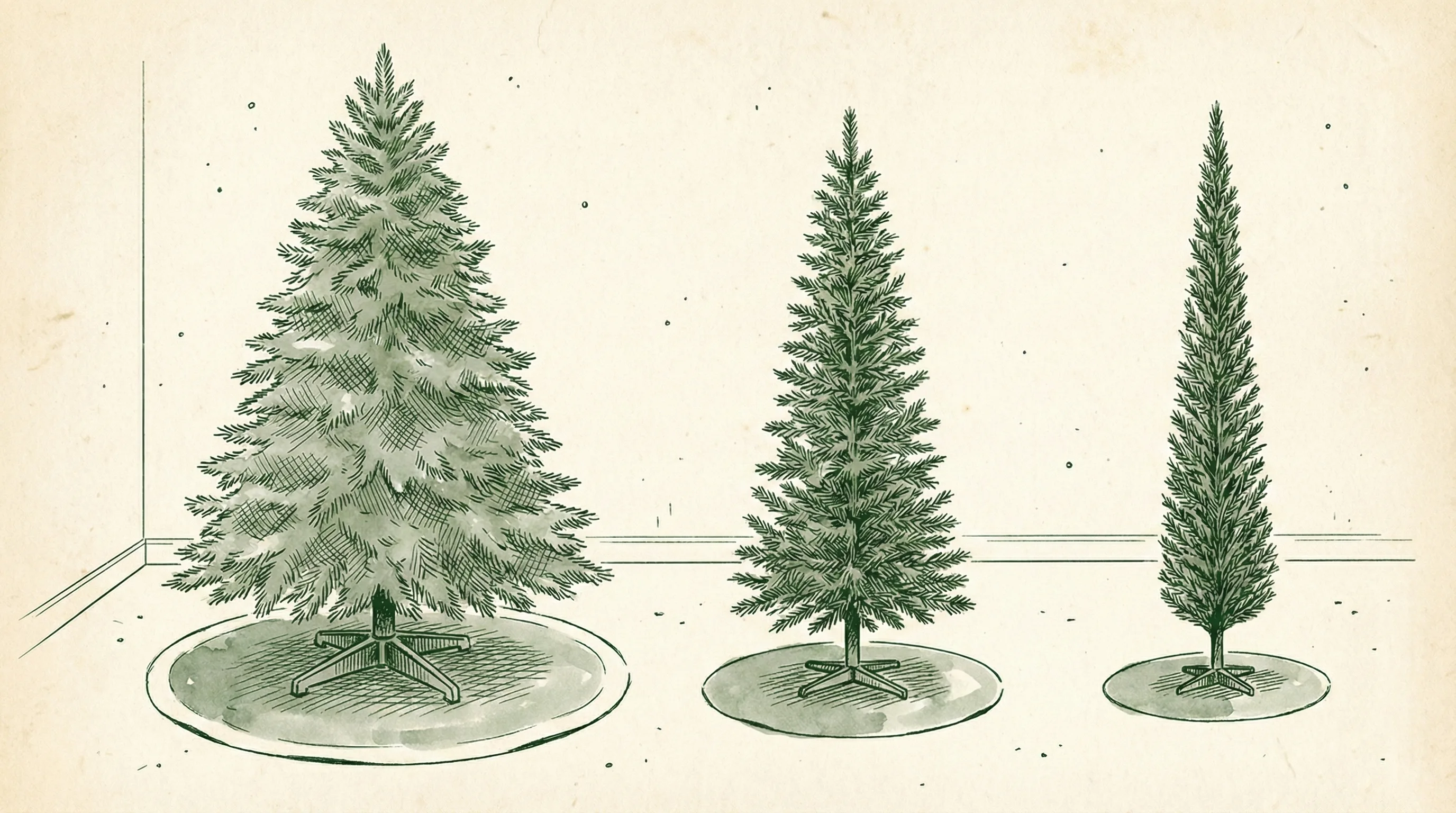
Pro tip: Tape out the diameter on your floor before you buy. See if you can walk around it comfortably. You need ~30" of clearance for main walkways.
Realism: PE vs PVC (And Why It Matters)
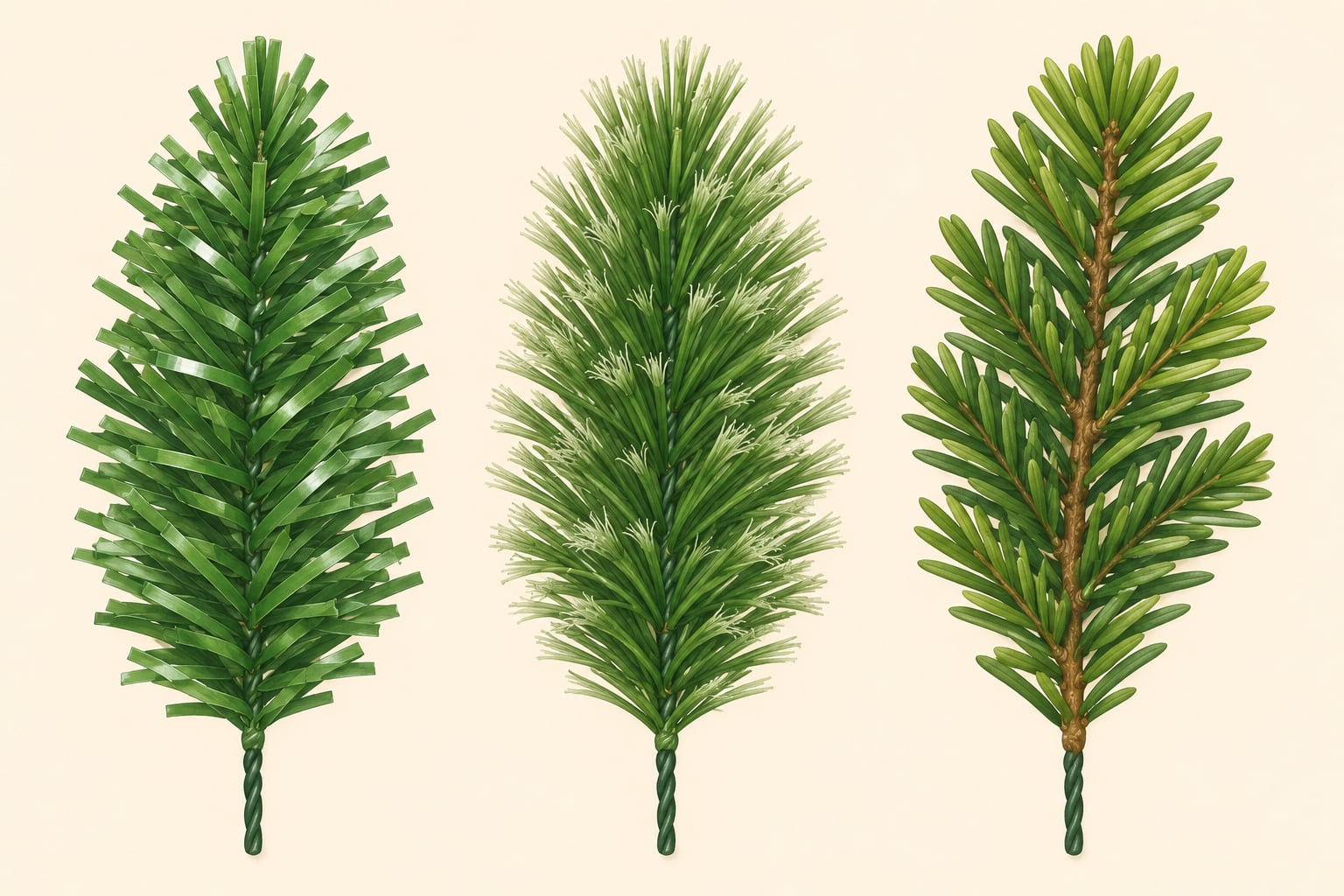
PE (Polyethylene): Molded from real branch cuttings. Looks realistic because it is realistic. More expensive.
PVC: Extruded plastic strips. Fills volume cheaply but looks obviously fake up close.
The sweet spot: 50-70% PE blend. PE on the outer tips where people see it, PVC on the inner branches for fullness and structure.
Reality check:
- Under 30% PE → Looks plastic-y unless you cover it in ornaments
- 50-60% PE → Good from 6+ feet away, fine for most families
- 70%+ PE → Looks great up close, worth it if you host
- 100% PE → Stunning but $$$$. Only worth it if you care a lot or have a large visible tree
Lights: Color, Count, and Control
Before you compare light specs, decide whether you want the lights built in at all; our pre-lit vs unlit comparison covers who should buy which and how long built-in lights last.
Color Temperature
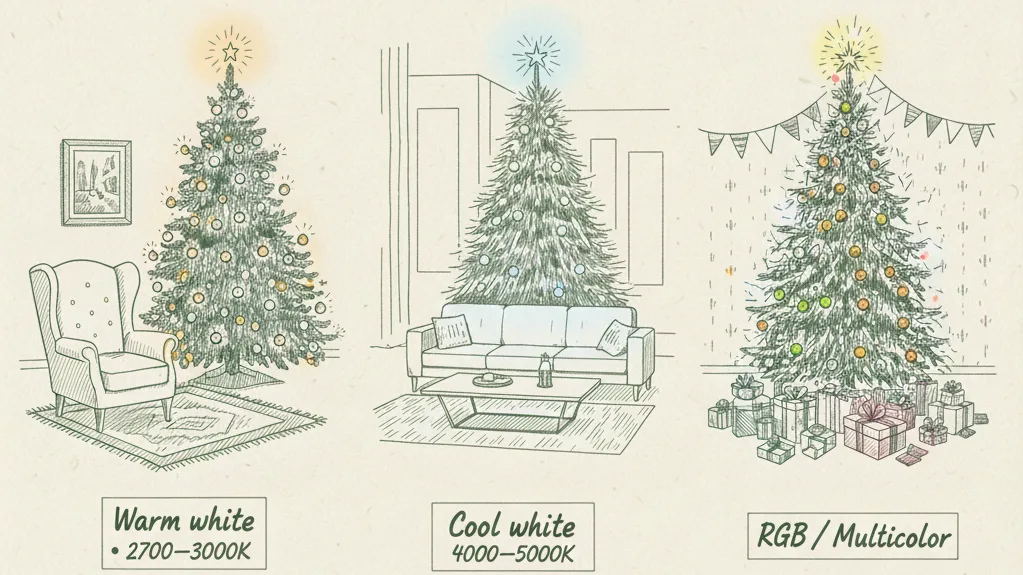
Warm white (2700-3000K): Cozy, traditional, candlelight vibe. Most popular.
Cool white (4000-5000K): Bright, modern, icy. Reads brighter at the same bulb count.
RGB/Multicolor: Can do warm white and colors. Fun for kids, great for theme switching. Requires good controls or it's annoying.
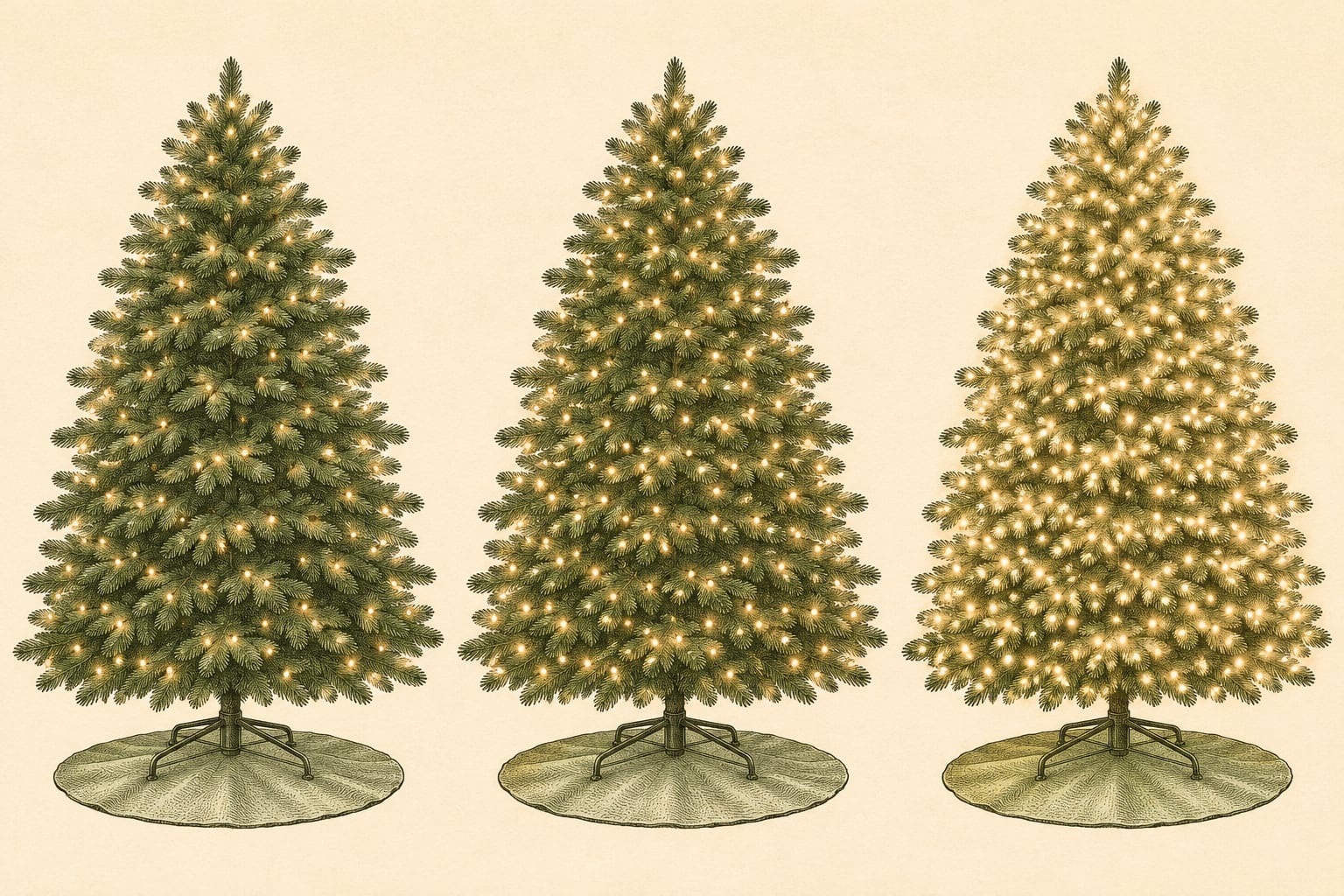
How Many Lights?
Classic look: 70-90 lights per foot. For a 7.5' tree, that's 525-675 bulbs.
Dense/magical look: 100-120+ lights per foot. Same 7.5' tree = 750-900+ bulbs.
Smaller or taller trees: Those ranges fit trees from about 6 to 10 feet. A 4-foot tree looks classic with about 200 lights and a 3-foot tabletop tree with about 100, while a 12-foot tree takes about 1,050 to 1,350. Our lights chart has counts for every height from 2 to 12 feet.
Reality: More isn't always better. Too many warm lights can look orange. Too many cool lights can feel like a hospital.
Control Systems
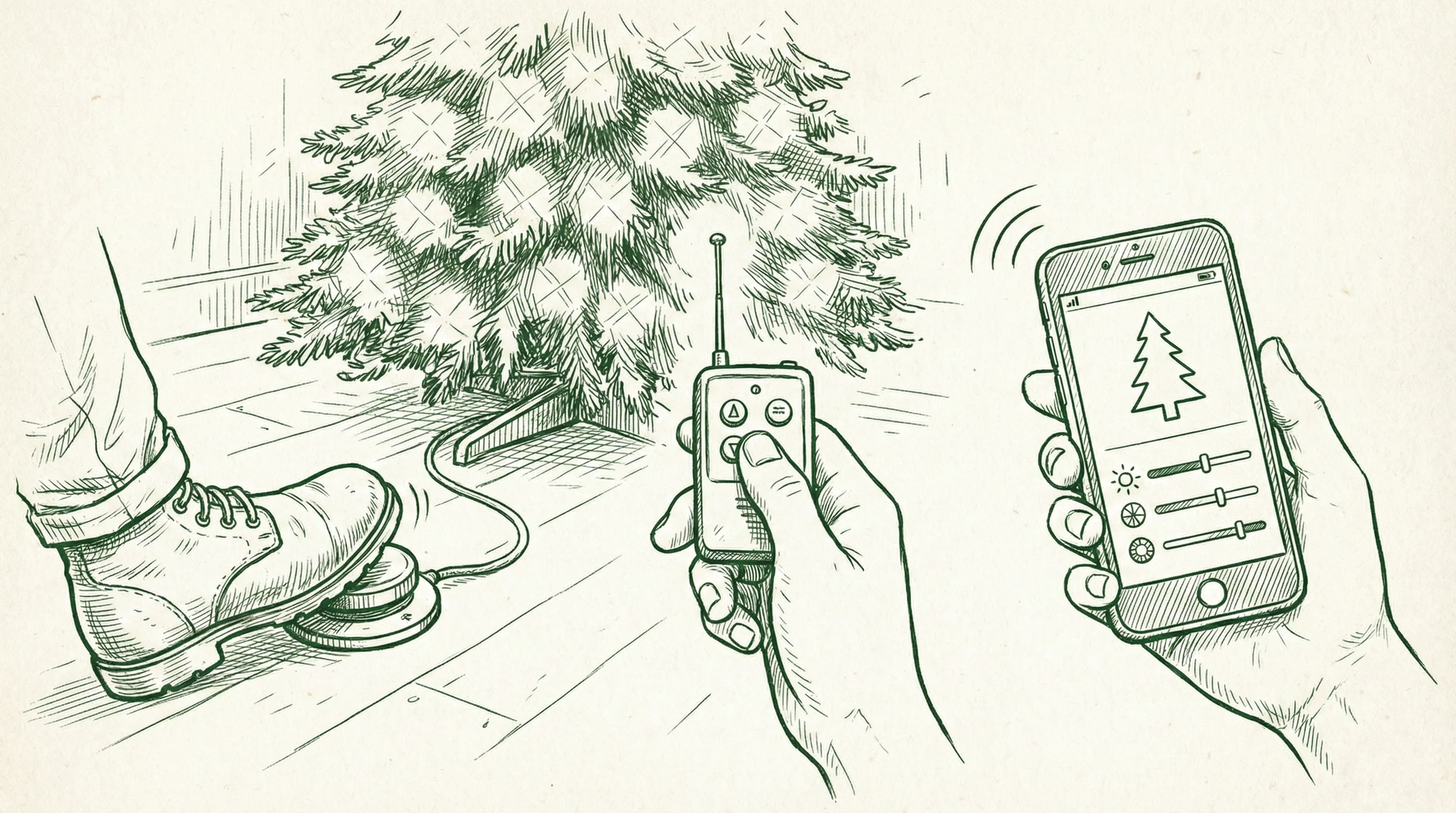
App control: Schedules, scenes, effects. Cool when it works. Can be glitchy. Requires WiFi or Bluetooth pairing.
Remote control: Simple, reliable. Keep spare batteries. Loses signal through thick trees sometimes.
Foot pedal: Underrated. Great for families—kids can turn it on/off without crawling under branches.
Built-in timers: Set it and forget it. No phone required.
Construction: What Holds Up (And What Doesn't)
Branch Types
Hinged: Most common now. Branches fold down like an umbrella. Fast setup. Easier storage.
Hook-in: Old school. Each branch attaches individually. Takes forever but lets you control fullness more precisely.
Memory wire: Wire in the branches that springs back toward a preset shape when you let them down. It cuts fluffing time, though how much varies a lot from tree to tree.
Trunk and Stand
Metal center pole: Standard. Should be thick enough it doesn't wobble.
Foldable stand: Usually included. Fine on hardwood/tile. Can tip on thick carpet—consider a tree mat or platform.
Power Pole/Easy Plug systems: Sections connect power internally. Fewer cords. Way cleaner look on big trees (9'+).
Assembly and Fluffing (The Part They Don't Warn You About)
First-year setup takes longer than most people expect. Balsam Hill tells owners to plan on two people and two to three hours of fluffing, depending on the tree's height and fullness. Some memory-wire trees need far less.
Fluffing tips:
- Fluff one section at a time, bottom to top
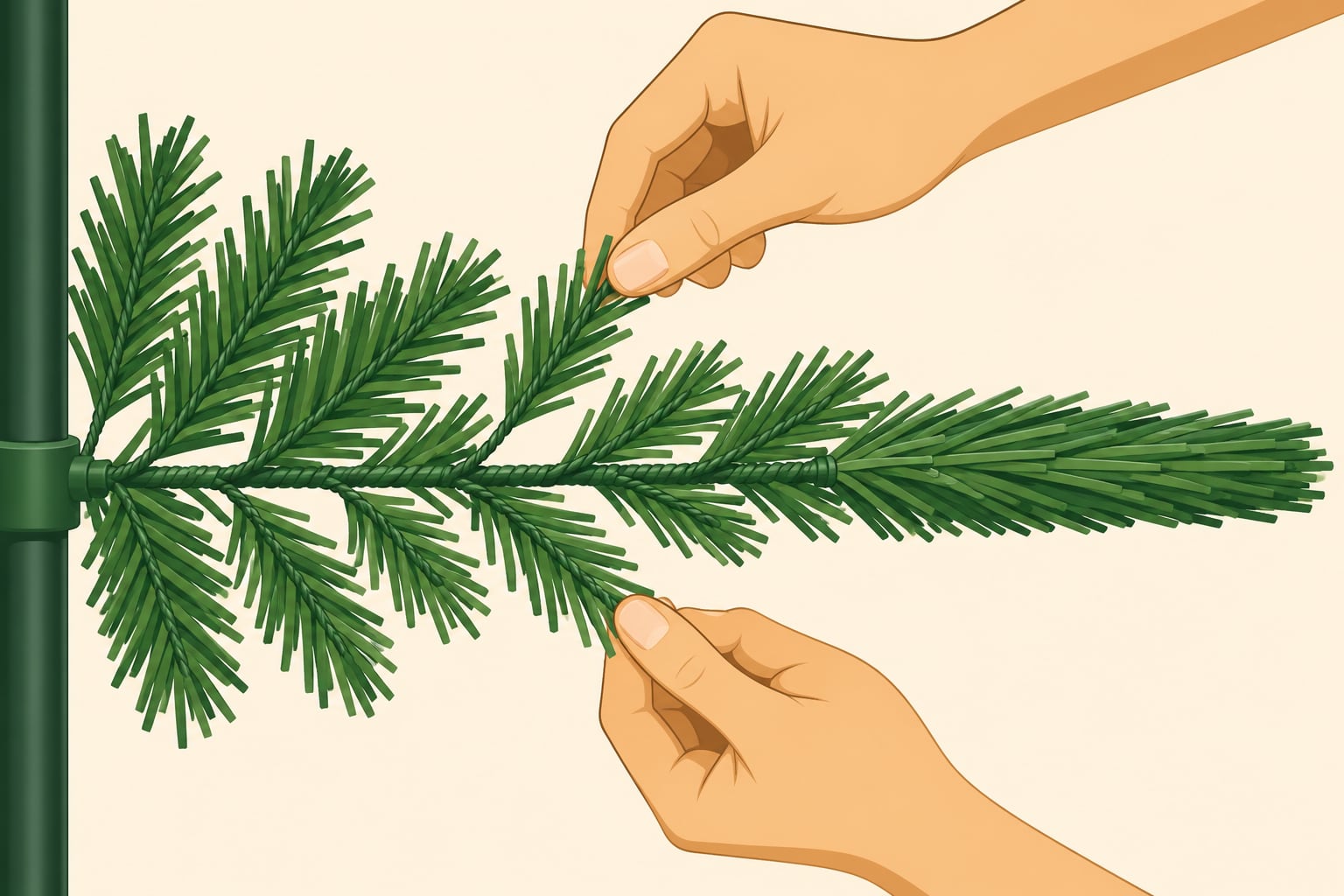
- On each branch, start at the trunk and work out, lifting the inner tips and spreading the side tips apart
- Point the tips the way your tree's photos show: up, down, or straight out
- Step back every 10 minutes to check for bare spots
Year two is faster: Balsam Hill says fluffing takes "considerably less" time in later seasons. Packing the tree away gently helps too.
Timing Your Purchase
Best prices:
- January (post-holiday clearance): 30-50% off retail
- Black Friday/Cyber Monday: 20-40% off, but popular sizes sell out
- Early November: Full selection, occasional 15-20% promos
Worst time:
- Mid-December: Prices go up, stock is picked over, shipping is slow
Pro move: Buy last year's model in January. Same tree, half price. Premium brands release new styles every 2-3 years, not annually.
Before you buy on sale: Our guide to the best time to buy an artificial Christmas tree walks through each sale window and the return and warranty terms that change on clearance.
Warranties and Returns
What to expect:
- 2-3 years for premium brands (Balsam Hill, King of Christmas)
- 1-3 years for store and budget brands. In our catalog, Wondershop lists one year, GE two, and Ashland three.
What's usually covered: Manufacturing defects, broken branches, light strand failures
What's NOT covered: Normal wear, damage from improper storage, your dog chewing the cord
Key: Keep your receipt and register the tree. Some warranties, like National Tree Company's, take effect only once you register.
Where to Buy
Direct from brand: Best customer service, full warranty support, sometimes exclusive models. Can be pricier.
Retailers (Costco, Home Depot, Wayfair): Competitive pricing, easier returns, sales tax usually included. Warranty support goes through the brand.
Amazon: Huge selection, fast shipping. Returns are easy. Watch for third-party sellers with inflated prices.
Outlet/Clearance: Great deals but selection is random. Check for damage before buying.
Final Thoughts
You're going to live with this tree for 5-15 years. It's worth spending an extra hour researching and an extra $100-200 to get one you actually love.
Don't cheap out on: PE percentage (if realism matters), light controls (you'll use them daily), branch construction (affects how it looks year after year)
Feel free to save on: Ornate stands (you'll cover it), fancy boxes (use your own bins), extended warranties past 3 years (trees either break early or last forever)
Questions? Check out our other guides on lights and controls, realism and build quality, or setup and storage.