
Realism & Build Quality
Our opinions are our own. We may earn a commission if you buy through our links. How this works
PE percentage, branch construction, tip count—and what it means for how realistic your tree looks. Marketing claims can be misleading. Here's what actually matters.
TL;DR
- PE percentage is the #1 realism factor: 50%+ looks good from across the room. 70%+ looks great up close. 100% is stunning but expensive.
- Tip count is misleading marketing: 2000 tips on a 6' tree ≠ 2000 tips on a 9' tree. Tips per foot matters more, but even that's not the whole story.
- Hinged branches are now the standard: Faster setup, easier storage. Hook-in branches are old-school and time-consuming but give you control over fullness.
- Memory wire helps, by very different amounts: Branches spring back toward a preset shape when you let them down. Some memory-wire trees need almost no fluffing, and others still need a lot.
- Branch thickness affects decorating: Heavier ornaments need thicker gauge wire. Most trees handle light ornaments fine; heavy ones need inner branches.
PE vs PVC: The Realism Divide
This is the single most important factor in how realistic your tree looks. Everything else is secondary.
PE (Polyethylene): The Realistic Stuff
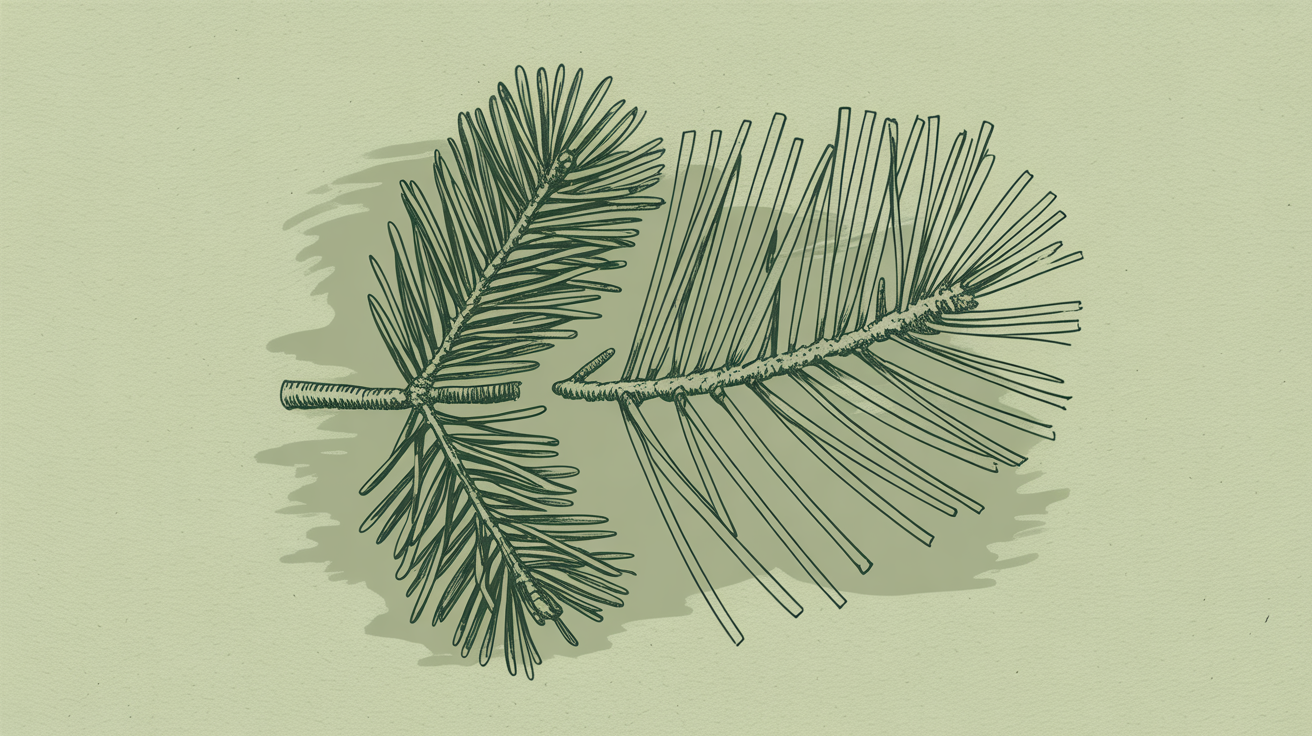
What it is: Molded from molds taken from real evergreen branches. Each needle has natural texture, variation in color, and irregular shape. The species behind the mold shapes the tip, and our guide to the types of Christmas trees covers how fir, spruce, pine, and cypress looks differ.
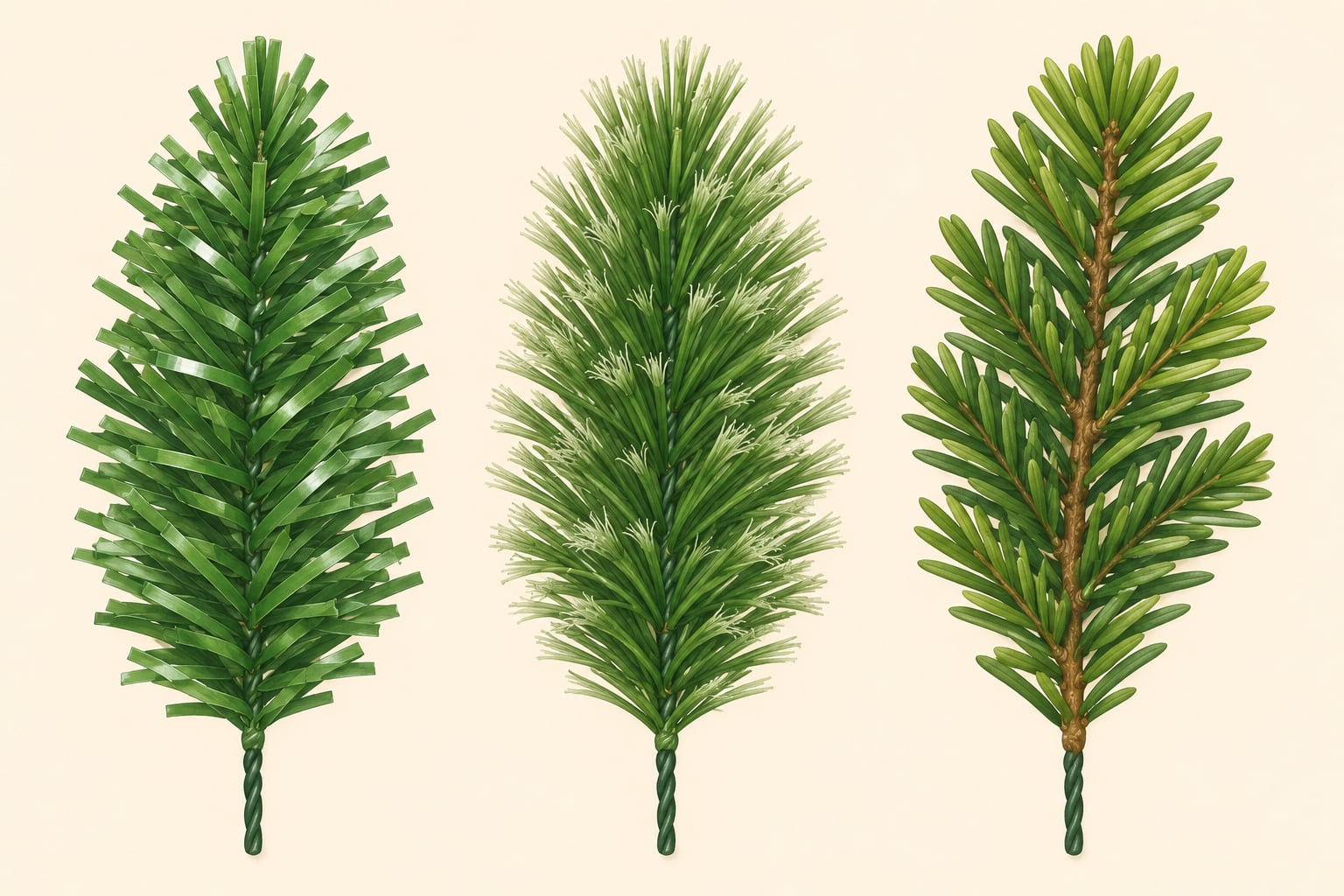
Why it looks real: Because it's literally copied from reality. When light hits PE needles, they scatter light like real needles. They have depth, subtle color gradients (darker at the base, lighter at the tips), and natural imperfections.
The catch: Expensive to manufacture. PE tips cost 3-5x more than PVC tips.
Where you'll see it: Outer branch tips on mid-range trees (50-70% PE), throughout premium trees (70-100% PE).
PVC (Polyvinyl Chloride): The Filler
What it is: Extruded plastic film cut into thin strips. Think of it like shredded green plastic bags. Firmer hard-needle PVC, often sold as "cashmere," is still PVC; our explainer on what a cashmere Christmas tree is covers that label.
Why it looks fake: Uniform color, flat texture, reflects light like plastic (because it is plastic). Up close, you can see the cut edges and the lack of depth.
Why brands use it: Cheap, durable, fills volume. A PVC branch with 200 tips looks full even if it doesn't look real.
Where you'll see it: Inner branches on PE blend trees, throughout budget trees (0-30% PE).
The Sweet Spot: PE/PVC Blends
Most trees are blends. Smart brands put PE where you see it (outer tips, eye-level branches) and PVC where you don't (inner branches, top sections you view from below).
Breakdown by PE percentage:
0-20% PE: Budget trees. Look plastic-y from 6+ feet away. Fine if you're going to cover the tree in ornaments and don't care about realism.
30-50% PE: Noticeable improvement. Looks decent from 8-10 feet away. Up close, you can tell it's artificial, but it's not offensive. Good value for money.
50-70% PE: This is the sweet spot for most people. Looks convincing from across a room. Up close you can tell, but guests won't care. Costs 30-50% less than 100% PE trees.
70-85% PE: Premium territory. Looks great up close. You have to touch it to know it's fake. Worth it if the tree is in a high-traffic area or you host often.
90-100% PE: Showpiece trees. Stunning realism. Expensive ($800-$2000+ for 7.5'). Only worth it if you really love your tree or it's the focal point of your holiday decor.
How to Evaluate PE Quality (Because Not All PE Is Equal)
Cheap PE: Single-color mold, stiff texture, uniform needle length. Looks better than PVC but still obviously fake.
Good PE: Multi-toned (darker base, lighter tips), soft/flexible needles, varied needle lengths. This is what premium brands use.
Signs of quality PE:
- Needles have subtle color variation (brown at base, green with slight blue/gray tones)
- Soft enough to bend without creasing
- Irregular spacing (like a real branch)
- Needles are grouped in clusters (2-5 needles together), not evenly spaced
Branch Construction: How It's Built Matters
Hinged Branches (The Modern Standard)
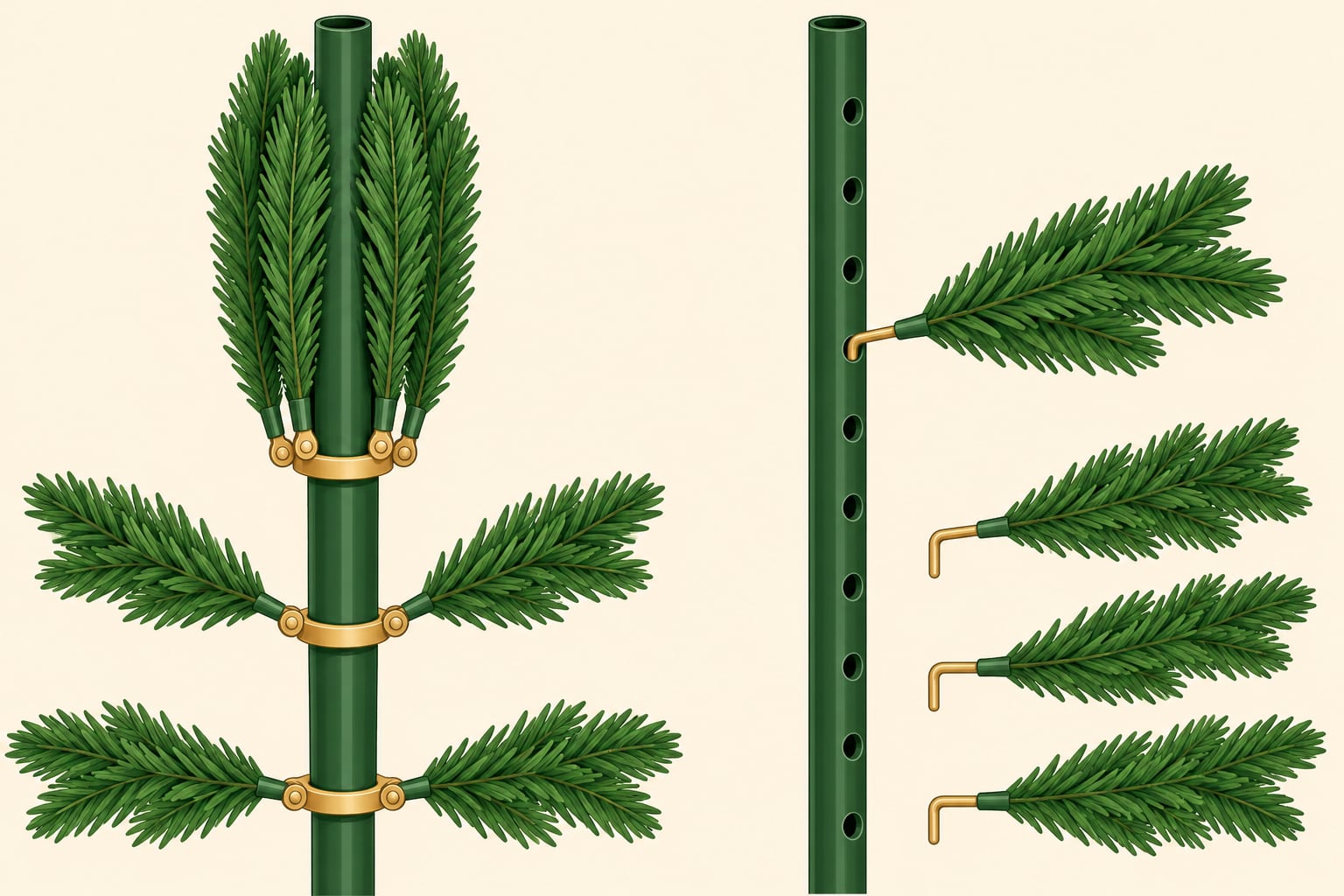
How it works: Branches are pre-attached to the center pole. You unfold them like an umbrella when assembling.
Pros:
- Faster setup (no sorting and hooking in branches)
- Easier to store (branches fold up compactly)
- Less chance of losing pieces
- Consistent branch placement year after year
Cons:
- Less control over branch positioning
- Can look uniform/artificial if not fluffed well
- Hinges can wear out over time (rare but possible)
Best for: 95% of buyers. Unless you have a specific reason to want hook-in branches, hinged is the way to go.
Hook-In Branches (Old School)
How it works: Each branch is a separate piece that hooks into holes in the center pole.
Pros:
- Full control over branch placement and angle
- Can add/remove branches to adjust fullness
- No hinges to break
Cons:
- Setup takes much longer, since every branch gets sorted and hooked in before you can fluff it
- Easy to lose branches between seasons
- Hard to get consistent fullness year after year
- Storage is a pain (hundreds of loose branches)
Best for: Perfectionists, people who like crafts, anyone with a weird space that needs custom shaping.
Memory Wire
What it is: Wire inside the branches that holds a preset shape. When you let the branches down, they spring back toward it instead of staying flat. National Tree Company calls its version Memory-Shape.
Why it matters: You spend less time positioning branches and more on the tips and the gaps, starting with the first setup. How much it saves varies a lot. Our Elegant Grand Fir review describes branches that fall into place with no fluffing at all, while the Breckenridge Downswept Fraser Fir still needs significant fluffing despite its memory wire.
Check the specs: Product names aren't proof. In our reviews, the label "Simple Shape" turns up on one tree with memory wire and on one without it. Look for memory wire itself in the specs.
Tip Count: The Most Misleading Spec
Brands love to scream "3000 TIPS!" in huge font. Here's why that number is almost meaningless on its own.
Why Tip Count Alone Doesn't Matter
Example:
- Tree A: 6 feet tall, 2000 tips = 333 tips per foot
- Tree B: 9 feet tall, 2000 tips = 222 tips per foot
Tree A looks way fuller, but they both advertise "2000 tips!"
Tips Per Foot (Still Not the Whole Story)
Even tips per foot can mislead:
- Short, sparse needles at high density = lots of tips, but thin coverage
- Long, lush needles at lower density = fewer tips, but better coverage
- Taller trees spread their tips over more branch = a 9-foot tree has about twice the branch surface of a 6-footer, so the same tips per foot looks sparser
What actually matters: Needle length × needle thickness × tips per foot = visual fullness.
The Eye Test
Forget the numbers. Look at photos:
- Can you see through the tree to the wall behind it? Too sparse.
- Are branches so dense you can't hang ornaments? Too much (or you need to thin it out during fluffing).
- Can you see some depth into the tree but it still looks full? Perfect.
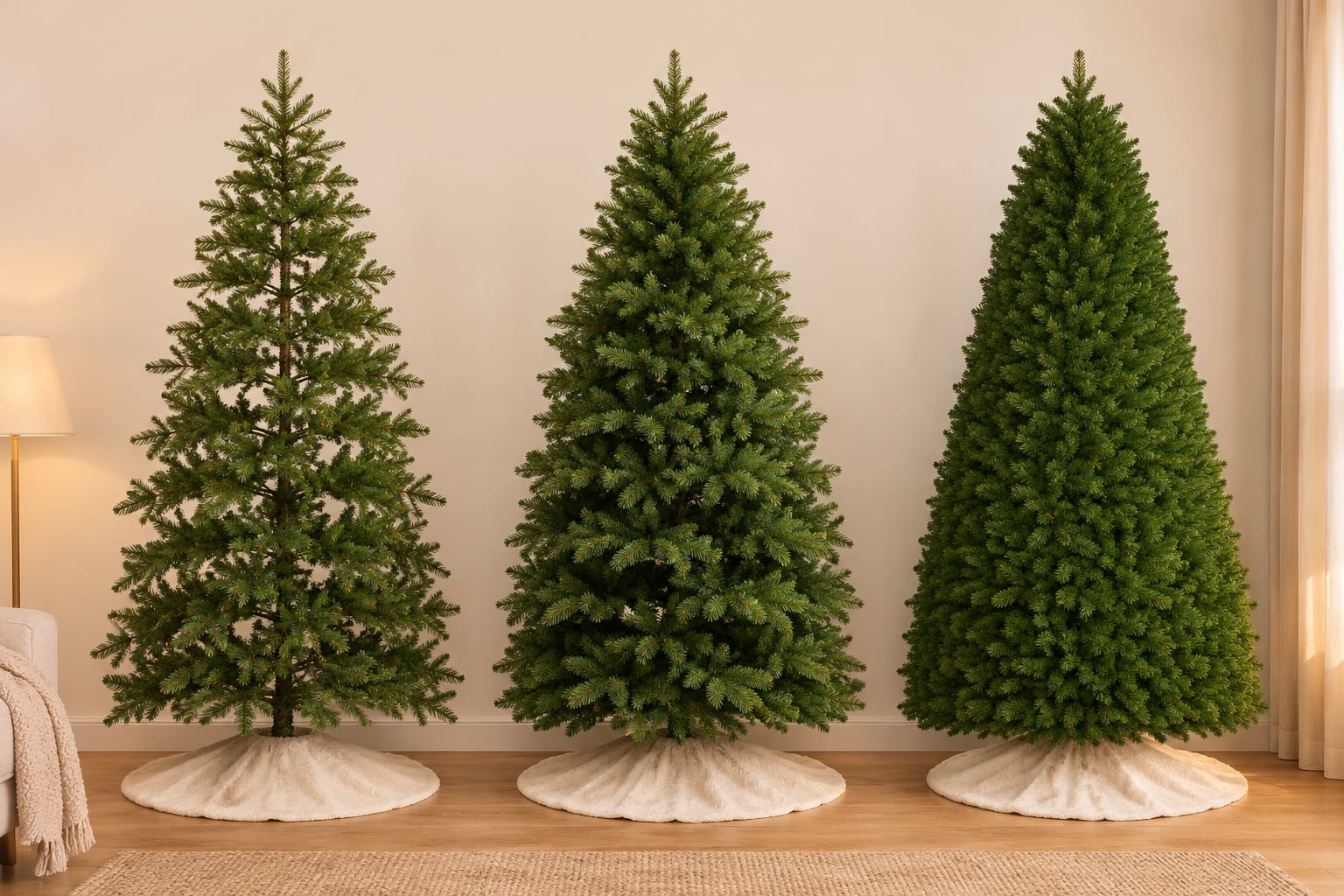
That's the test for a tree sold as full. Some trees are built with open space between their layers on purpose, and our guide to sparse Christmas trees covers how to tell the difference.
Trunk and Frame Construction
Center Pole
What to look for:
- Thick enough it doesn't wobble when you shake the tree (at least 1" diameter for 7'+ trees)
- Rust-resistant coating (powder-coated steel is standard)
- Sections fit together snugly (no gaps, no wiggle)
Red flags:
- Thin pole (less than 0.75" on a 7'+ tree)
- Visible rust or uncoated metal
- Sections don't align properly
Branch Wire Gauge
Thicker wire (lower gauge number) = stronger branches. Most trees don't list wire gauge, and we haven't found a tree maker that publishes how much weight a branch can hold. If you care about hanging heavy ornaments, ask the maker or check reviews for ornament complaints.
Pro tip: Hang heavy ornaments on the inner third of each branch, not on the outer tips. The same ornament bends a branch more the farther out it hangs. Our ornament count chart covers where heavy ornaments hold best.
How to Evaluate Quality in Person (Or From Photos)
In a Store
- Touch the needles: Good PE feels soft and slightly flexible. PVC feels stiff and crinkly.
- Look at color variation: Real trees aren't uniform green. Look for brown tones at the base, subtle blue/gray/yellow tints.
- Check branch attachment: Wiggle a branch. It should feel secure, not loose or wobbly.
- Inspect the hinges: On hinged trees, open and close branches a few times. Smooth action = good. Stiff or catchy = potential failure point.
- Look for gaps: Step back 6-8 feet. Can you see big gaps between branches? That's a design flaw, not something fluffing can fix.
From Photos Online
- Zoom in on branch close-ups: Can you see individual needle texture? Good sign. Everything blurred together? Probably low-quality PVC.
- Check multiple angles: Brands hide sparse sections. Look for photos from the back and sides, not just the glamour front shot.
- Read reviews with photos: Real customer photos show what the tree looks like in a normal house, not a professional studio.
- Watch for heavy retouching: If the product photos look too perfect (no shadows, no depth), they might be heavily edited.
Longevity: What Lasts (And What Doesn't)
What Wears Out First
- Lights (pre-lit trees): 6-7 seasons is typical, and better-built trees often reach 8-10 or more with gentle handling. Repairable on some models, nightmare on others.
- Hinges: 5-10 years. High-quality hinges last longer. Cheap ones can crack or bend.
- Needles: 10-20 years. PVC lasts longer than PE, ironically. PE can fade or dry out if stored in extreme heat.
- Frame: 15-20+ years if properly cared for. Metal doesn't really wear out unless you're rough with it.
How to Maximize Lifespan
During use:
- Don't hang super heavy ornaments (6+ oz) on outer branch tips
- Keep tree away from heat sources (fireplace, radiators)
- Don't let pets chew on branches (obviously, but people forget)
During storage:
- Store in a cool, dry place (attics in Arizona = bad; climate-controlled basement = good)
- Use tree bags or boxes to prevent dust and UV exposure
- Don't crush branches (compress gently, don't force)
Common Quality Issues and How to Spot Them
Sparse Patches
Cause: Branches that aren't fully fluffed yet, poor design, uneven branch distribution, or you got unlucky.
Fix: Re-fluff the branches around the gap, including the inner tips nearest the trunk. In severe cases, add faux greenery sprays or a tree pick. Our guide to fluffing an artificial Christmas tree walks through filling gaps step by step.
Prevention: Check the return policy before buying. Most trees look sparse straight out of the box, so fluff it fully before you judge it. If you still see big gaps from six to eight feet away, contact the seller soon. Some only take change-of-mind returns on trees that were never assembled, and their rules for defective trees can be different.
Branch Droop
Cause: Wire too thin for the branch length/weight, or you hung too many ornaments.
Fix: Floral wire can reinforce drooping branches (wrap around the branch and trunk). Or move heavy ornaments to inner branches.
Prevention: Check reviews for "droopy branches" complaints before buying.
Needle Shedding
Cause: Cheap manufacturing, damaged branches, or the tree is old and dying.
Fix: If it's new and shedding heavily, return it. If it's old, accept it or replace the tree.
Prevention: Buy from reputable brands. Budget trees shed more.
Flocked trees: Some shedding is normal, mostly during setup each year, and our explainer on what a flocked Christmas tree is covers how much to expect and how to keep it down.
Uneven Color
Cause: Different batches of PVC/PE, UV exposure during storage, or just poor quality control.
Fix: String lights to hide it, or embrace it (real trees aren't uniform either).
Prevention: Check owner reviews of the specific tree for color complaints, and look over each section when it arrives so you can return a mismatched tree.
What to Look for When Shopping
Must-Haves
- At least 50% PE if realism matters to you
- Hinged branches unless you have a specific reason to want hook-in
- Sturdy center pole (check reviews for "wobbles" or "unstable")
Nice-to-Haves
- Memory wire (saves fluffing time, though how much varies a lot from tree to tree)
- 70%+ PE (noticeable quality jump from 50%)
- Multiple tip types (mix of long and short needles = more realistic)
Don't Pay Extra For
- Tip counts over 200/ft (you hit diminishing returns)
- "Hand-painted" tips (sounds premium but rarely makes a visible difference)
- Proprietary branch designs with fancy names (marketing fluff most of the time)
Final Thoughts
Realism is subjective. A tree that looks great to you might look fake to someone else. Here's the honest breakdown:
If you're decorating heavily (lots of ornaments, garland, ribbons): Save money on PE percentage. You're covering it anyway. Focus on a sturdy frame and good branch construction.
If you want a minimalist or natural look: Invest in 70%+ PE. The tree itself is the star, so it needs to look good naked (before ornaments).
If you're on a budget: Look for 50% PE blends. They're the best bang for buck. In our catalog, Holiday Living's Parque (55% PE) and Ashland's Collins Fir (50%) are good mid-range examples.
If money isn't an issue: Look at Balsam Hill's Most Realistic tier, like the Vermont White Spruce (70%+ PE). If you want 100% PE, Home Decorators Collection's Elegant Grand Fir gets there for far less, though its stiff needles make ornaments harder to hang.
And remember: most trees, PE or not, look flat and sparse until they're fluffed. Spend the time on setup. It makes a massive difference.
Next steps: Learn how to assemble and store your tree properly, or check out our buying guide for the complete picture.