
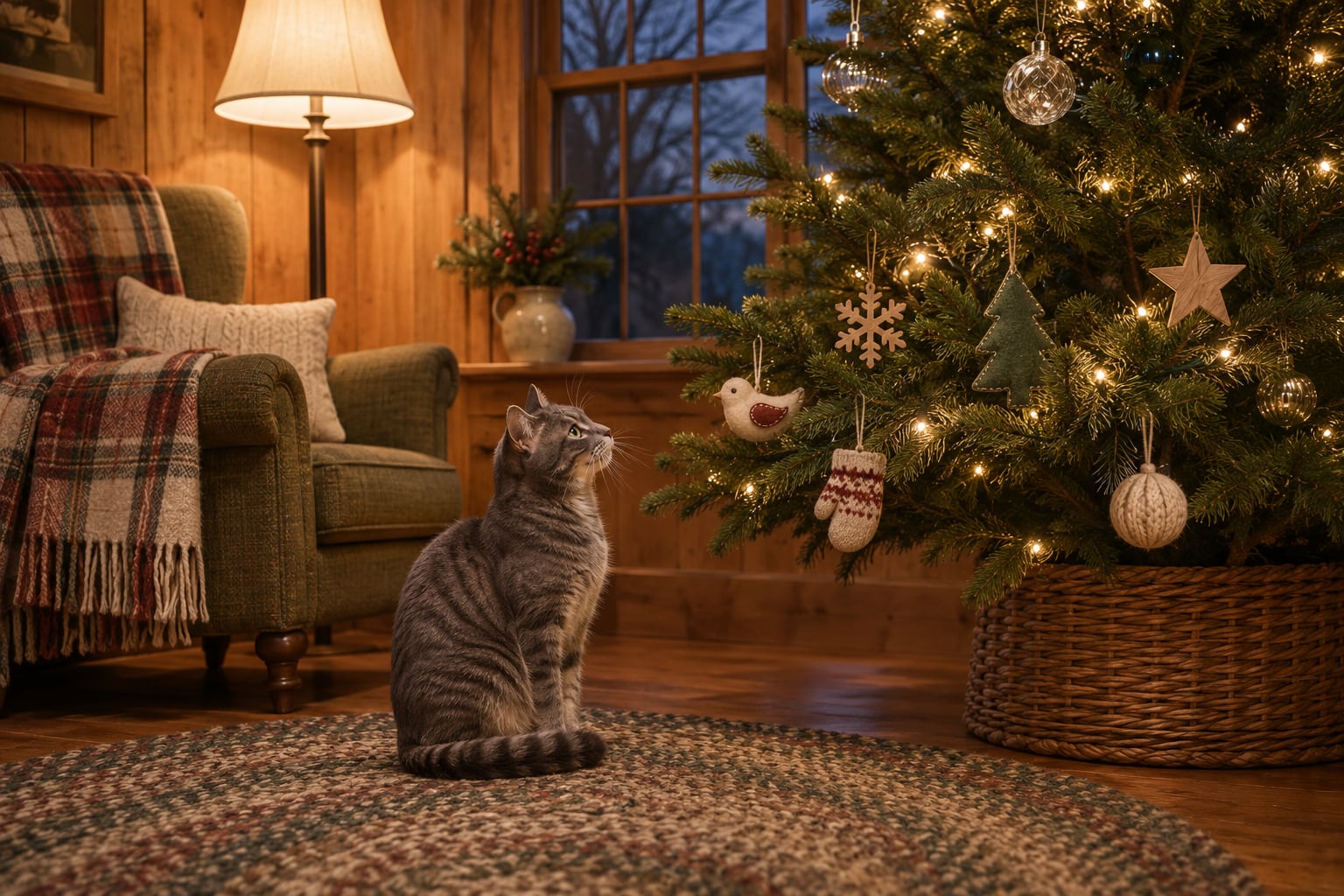
There's no such thing as a cat-proof Christmas tree, but you can get close. Tie the tree to the wall or ceiling so it stays upright, keep the lower branches free of anything breakable, leave tinsel and edible decorations off entirely, and protect the cord. Dogs need the same anchoring and a different barrier. They knock trees over from the floor, with a bump or a wagging tail, so a gate or a closed door does most of the work.
An artificial tree helps with part of this. Pet Poison Helpline recommends one for cat owners so the cat "can't ingest sap, tree water or pine needles." It won't stop a chewer, though. The Cornell Feline Health Center warns that an artificial tree "may not discourage a persistent feline from choosing the branches as a midnight buffet," and a climbing cat can topple either kind.
Anchor the Tree Before You Decorate
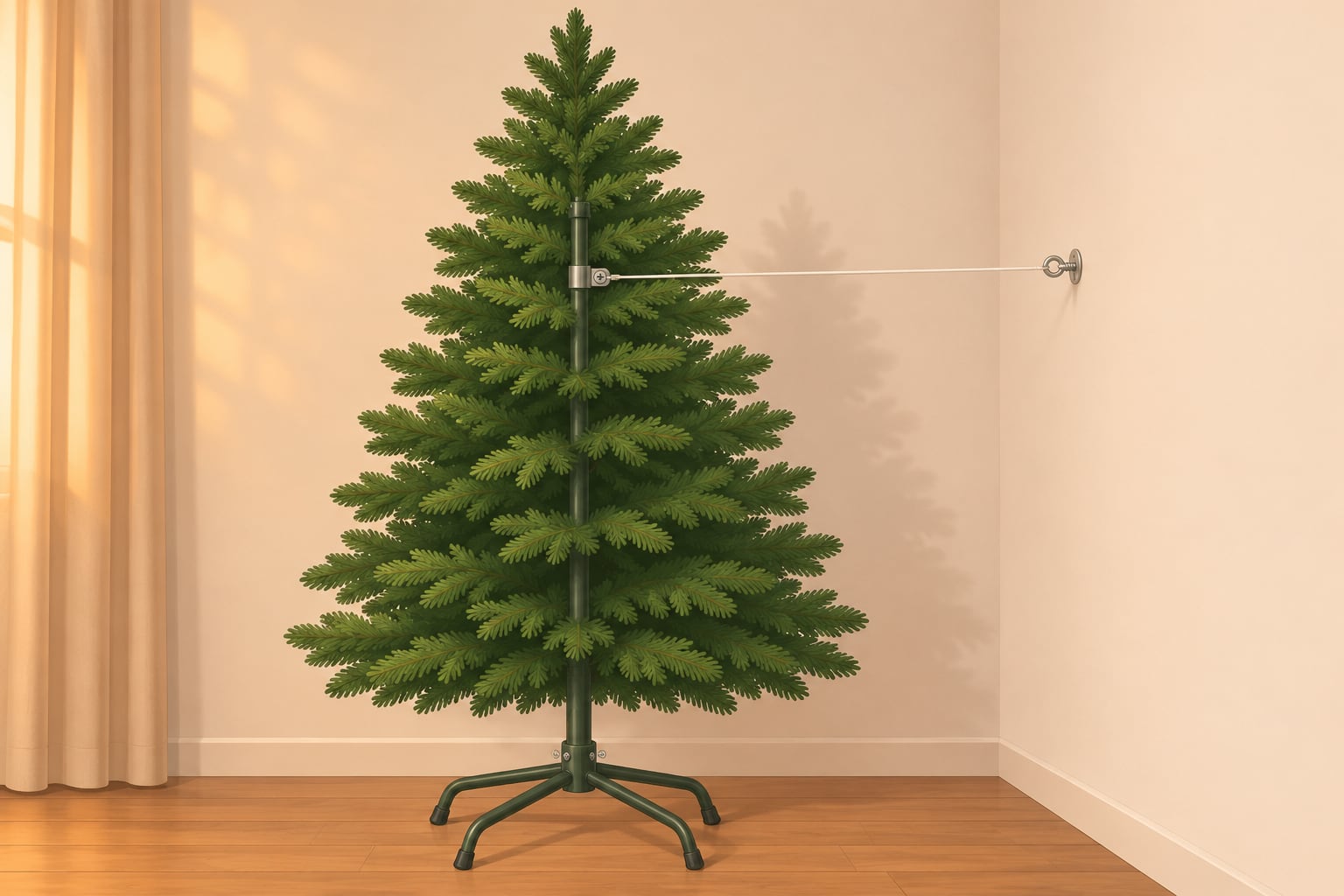
According to the American Veterinary Medical Association, "Christmas trees can tip over if pets climb on them or try to play with the lights and ornaments." Its fix is to tie the tree "to the ceiling or a doorframe using fishing line." Pet Poison Helpline adds that the tree "should be secured at the top and bottom."
The stand can't do that job alone, because it's much narrower than the tree. Among the 7.5-foot full trees in our catalog whose specs include a stand size, the stand measures 21 to 26 inches across under 50 to 62 inches of branches. Here's how that works out on a few trees, including a slim and a pencil version:
| Tree | Tree width | Stand width | Branches past the stand, each side |
|---|---|---|---|
| Parque, 7.5 ft slim | 44 in | 22 in | About 11 in |
| Parque, 7.5 ft full | 55 in | 22 in | About 16.5 in |
| Classic Fraser Fir, 7.5 ft | 52 in | 22 in | About 15 in |
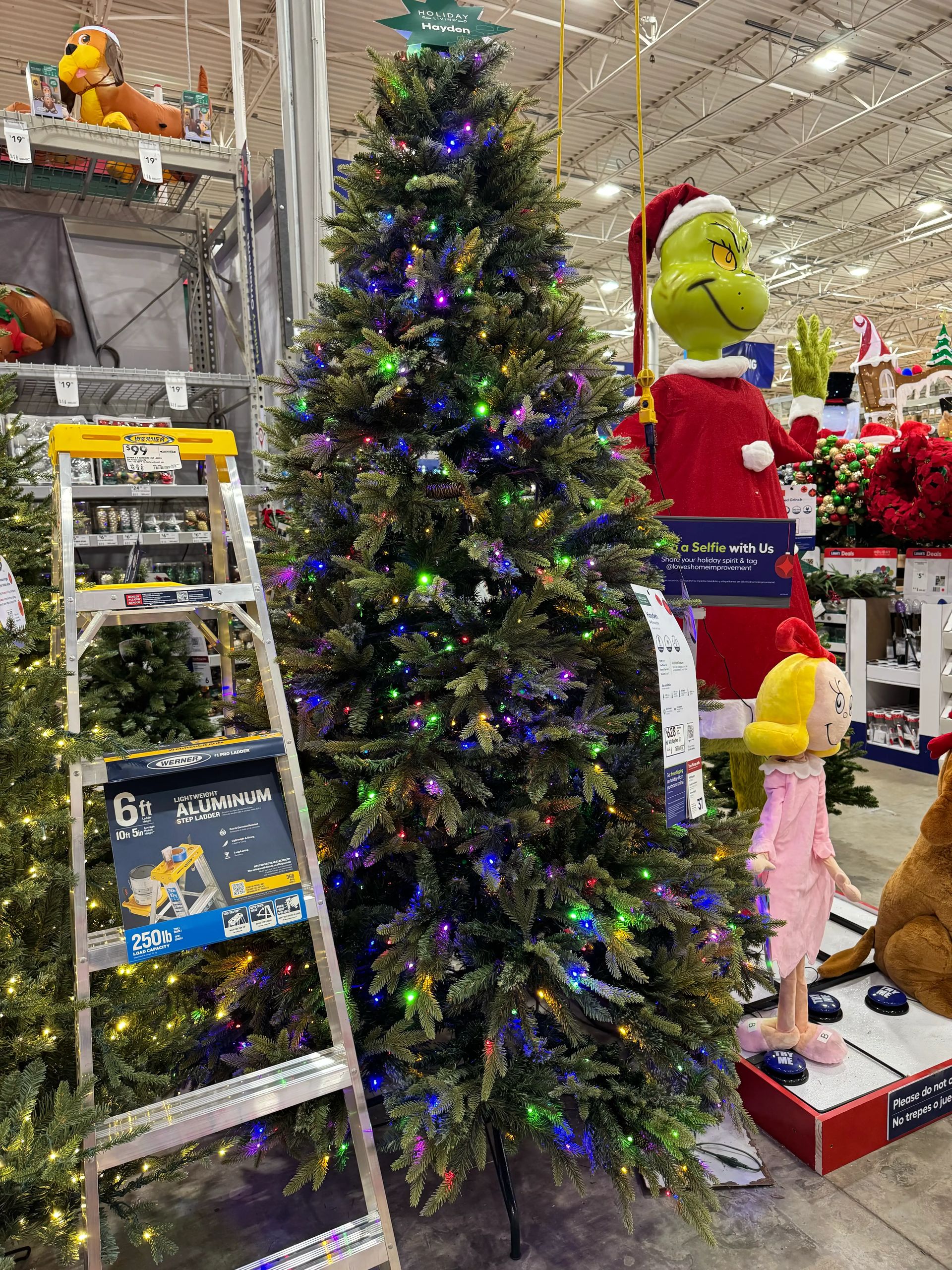
| Hayden Pine, 7.5 ft | 58 in | 26 in | About 16 in |
| Hayden Pine, 7 ft pencil | 28 in | 19 in | About 4.5 in |
A cat out on a lower branch, or a dog leaning into one, pushes on the tree more than a foot outside the legs holding it up. A slimmer tree cuts that reach. The Parque comes in full and slim versions on the same 22-inch stand, and the slim one's branches end about five and a half inches closer to the legs on every side.
To anchor an artificial tree:
- Start with the stand. Set it on a level spot, tighten it on the pole, and push each section down until it's fully seated.
- Add a hook for the line. A screw eye behind the tree works. Set it in a stud, or use a drywall anchor if there's no stud there. Cornell's version goes overhead, anchoring the tree to the ceiling "with a cup hook and some wire or string."
- Tie the center pole, not a branch. Reach in below the top section and loop fishing line or thin wire around the pole. The top section just slots into the one below it, so a tie up there wouldn't hold the rest of the tree.
- Keep the line snug and clear of the wiring. It should hold the tree upright without pulling it toward the wall, and it shouldn't pinch the light wires or plugs.
Our half Christmas tree guide uses the same kind of tie for a tree that sits flat against the wall. A corner is a good spot: the tree is easy to tie off there, and it leaves fewer sides to reach the tree from. Keep the tree away from a sofa back, a bookshelf, or a windowsill a cat could jump from.
Keep the Bottom of the Tree Boring
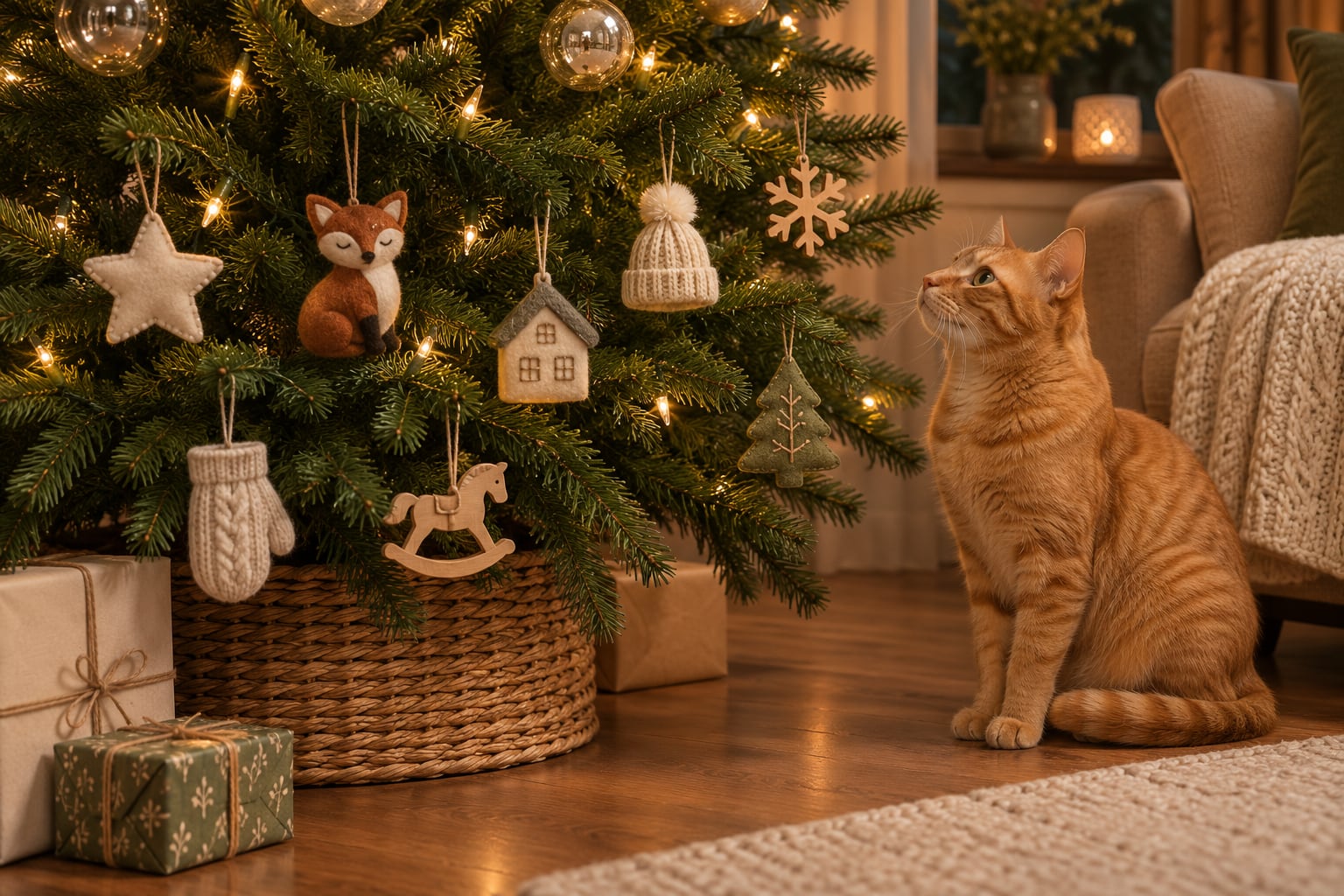
Once the tree is anchored, make the lower branches, the part a cat can bat and a dog can reach, as dull as you can. A climbing cat can reach every branch, though, so a few things come off the tree entirely. The veterinary sources agree on what to leave off:
- Tinsel and long ribbon, anywhere on the tree. Pet Poison Helpline calls tinsel "a common cause of feline bowel obstruction," and the AVMA says tinsel and ribbons, swallowed "in whole or in part," can cause choking or an intestinal blockage.
- Edible ornaments, anywhere on the tree. PetMD's dog-proofing guide, written by Pet Poison Helpline's veterinarians, lists "popcorn strands, dough ornaments, macaroni art, or any other food products." The ASPCA warns that salt-dough ornaments, "even when dry," can tempt pets and "can cause life-threatening imbalances in electrolytes." Keep wrapped food or candy off the floor too, because "pets might smell it."
- Glass and other breakables on the lower branches. The AVMA warns that "breakable ornaments can cause injuries," and that swallowed ornaments can block the gut. Cornell recommends "cloth, straw, wood, or other non-breakable materials" at a cat's eye level.
- Wire hooks. Cornell's tip is to tie the low ornaments on "with cloth loops rather than hooks."
Decorate in stages. PetMD recommends waiting a few days before decorating "so your dog can adjust to the tree's presence," and keeping ornaments and lights off the bottom branches "to minimize the curiosity of a dangling ornament or shiny light." The bare tree is a useful test for a cat too. If it's already climbing, put a deterrent at the base before the glass goes on.
Lights, Cords, and the Remote
Cords are where a chewing pet can get badly hurt. The AVMA says "electric lights can cause burns when a curious pet chews the electrical cords," and Pet Poison Helpline says cats "will occasionally chew through light strands, which can cause electrocution." If you find a chewed cord, its advice is to bring the pet to the vet "immediately" for an evaluation.
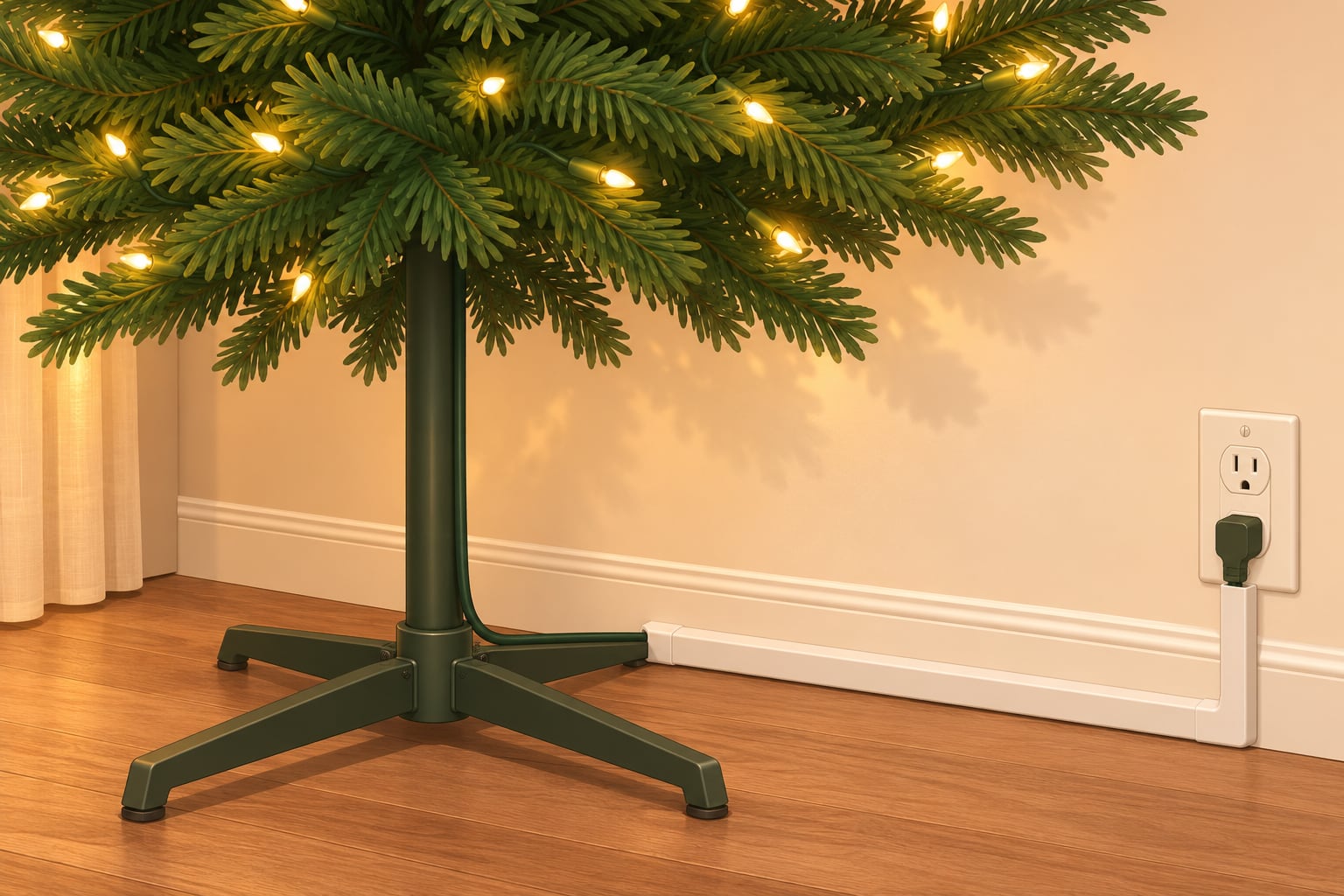
On a pre-lit tree, the lights are wired onto the branches, the bottom row included, and they don't come off. Tuck the strands against the lowest branches so no loops hang down. On many pre-lit trees, power runs up through the center pole, which leaves a single cord at the base. An unlit tree lets you follow PetMD's advice and start the lights above the bottom branches, though you'll have more strands and plugs to manage. Our pre-lit vs unlit comparison covers the rest of that choice.
Whichever you have:
- Run the cord straight down the back of the pole to the floor instead of wrapping it around the trunk. Our setup guide explains why.
- Cover the run to the outlet. Cornell recommends "a heavy plastic cord protector, available at hardware stores," and PetMD names a tree skirt as another way to cover it.
- Unplug the tree when you're out or asleep. The AVMA says to unplug decorations "while you're not around." Its reason: "Cats, dogs and other pets are often tempted to chew electrical cords."
The remote needs a safe spot too. About two in five trees in our catalog come with one, and most of the listings that name the battery call for a CR2025 or CR2032 coin cell. The ASPCA asks owners to keep "wires, batteries and glass or plastic ornaments out of paws' reach," and warns that "a punctured battery can cause burns to the mouth and esophagus." Keep the remote on a shelf, not on the tree skirt.
Trees That Hold Up Better With Pets
Once the tree is anchored, look for two things in the tree itself:
- A wide stand and a narrow profile. PetMD says trees "should be mounted on a wide base stand and/or anchored to a wall to prevent falls." A wider stand helps even when the branches reach just as far past it, because the farther out the legs go, the more of the tree's own weight works against a tip. Most listings don't give the stand's width, so look for it in the manual or the product photos. The 7.5-foot Hayden Pine sits on a 26-inch stand, the widest we have on record at that height, and our review calls its metal stands stable at every size. Its 7-foot pencil version keeps its branches within about four and a half inches of its stand. The Hayden comes with pinecones attached to its branches, so watch whether a chewer goes after them.
- A plain green tree if your cat chews. Many flocked and glittered trees shed. Our reviews say the Candlewood Pine's flocking "sheds during setup and occasionally throughout the season" and the Glittering Frosted Slim Pine's glitter "sheds continuously." The ASPCA told Snopes that dry flocking isn't considered a poisoning hazard, but "flocking material is typically plastic, so the primary risks when ingested by our pets is potential foreign body and GI upset." The Celebration Pine has silver tinsel strands worked into its branches, the same material the veterinary sources above say to skip.
If you're still choosing between real and fake, our real vs fake comparison covers the tree-water question for pets.
Cats and Dogs Need Different Fixes
Cats come at the tree from above and from inside. They climb the trunk, jump in from furniture, bat at anything that moves, and chew. Once the tree is anchored, the job is making the base unpleasant and giving them somewhere better to climb:
- A surface they dislike around the base. For stopping cats from scratching furniture, the ASPCA recommends putting "plastic, double-sided sticky tape, sandpaper or upside-down vinyl carpet runner (knobby parts up)" where the cat would stand. Around a tree, that means the floor in front of the stand or a strip along its legs. Aluminum foil is the other common suggestion, but skip it with a chewer. In a warning about candy wrappers, the ASPCA says "ingesting aluminum foil or cellophane can cause intestinal blockage and vomiting."
- Something bitter on the lower branches. Cornell suggests "a light coating of something distasteful on the lower branches" and notes that "not all cats dislike the same things," so expect to experiment. Bitter anti-chew sprays sold for pets are one option. Unplug the tree before you spray near the lights.
- No essential oils. Cornell's article also lists peppermint or other pungent oils, and plenty of tree guides recommend citrus sprays. Pet Poison Helpline lists citrus oil (d-limonene) and peppermint oil among the oils known to cause poisoning in cats, and Cornell's own page warns elsewhere that swallowed essential oils "can cause significant chemical burns to the mouth, tongue and esophagus." Leave them out.
- A better place to climb. That ASPCA scratching advice pairs each deterrent with a "legal" alternative right next to it. For a climber, that means a cat tree within sight of the Christmas tree.
Dogs come at it from the floor. PetMD lists "an excited tail bump, a curious nose, or even a pup pawing at an ornament" among the ways a tree comes down, and calls the lower branches "a high impact zone for excited wagging tails." Most dogs can't climb, so the fixes are simpler:
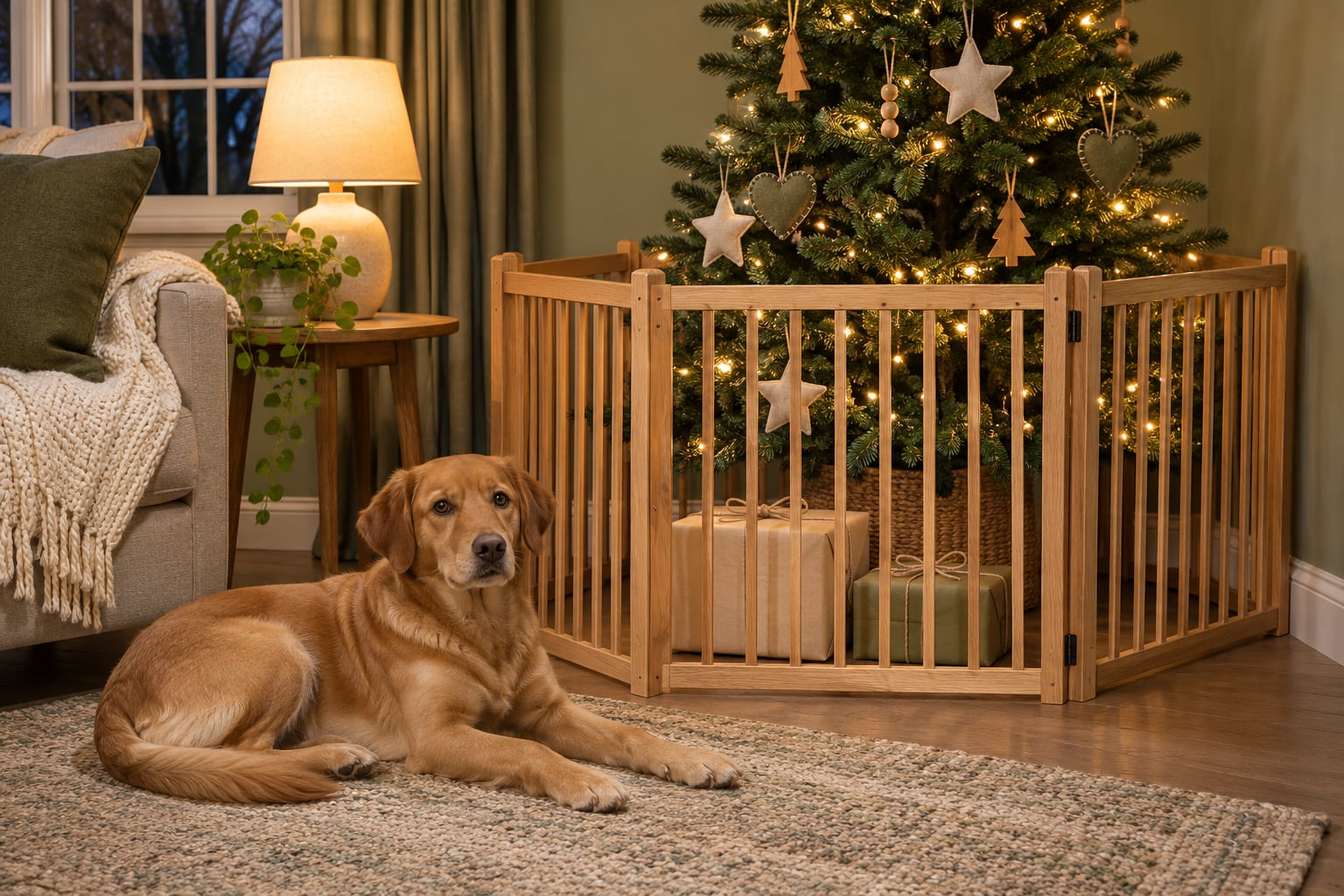
- A gate around the tree, or a door you can close. PetMD's options are a dog gate, which can serve as "a Christmas tree fence for dogs," or "simply closing the door to the room the tree is in."
- Durable ornaments low, and nothing edible. PetMD puts "the most durable and least chewable ornaments down low where a curious nose or mouth may find them." Keep popcorn strands and dough ornaments off the tree, and gifts with food inside out from under it.
- Anchoring for a big dog. The AVMA's advice to tie the tree is for pets in general, not just climbers, and PetMD lists anchoring to a wall as one way to keep a tree from falling.
A gate does little against a cat that can jump onto a kitchen counter, so it's a fix for dogs.
If the Tree Keeps Coming Down
Some cats win anyway. Cornell's Feline Health Center quotes Dr. Pamela Perry on a couple who tried again and again to keep their tree standing in spite of their cat. The wife finally gave up and left the house. "When she returned, her husband had hung the tree upside down from the ceiling."
You don't have to go that far. Putting the tree in a room you can close off takes the problem away, and a tabletop tree makes that easier in a small home. Our small-apartment guide covers them. A half tree goes flat against the wall, where it's easy to tie off, and keeps a full-height look.
Cat-Proof Christmas Tree Questions
What is the best Christmas tree for cats?
One that's tied to the wall or ceiling, first of all. As Cornell's Feline Health Center puts it, "Unless the tree is anchored, the results can be devastating." Pet Poison Helpline recommends an artificial tree so the cat "can't ingest sap, tree water or pine needles." Look for one on a wide metal stand, without flocking, glitter, or built-in tinsel. A slim tree also has less branch reaching past its stand. In our catalog, the 7.5-foot Hayden Pine has the widest stand we have on record at that height, 26 inches across, though a chewer may go after its attached pinecones.
How do I stop my cat from eating my fake Christmas tree?
Put something distasteful on the lower branches, as Cornell suggests. A bitter anti-chew spray sold for pets is one option; unplug the tree before you spray near the lights. Skip essential-oil sprays, since Pet Poison Helpline lists citrus and peppermint oils among those known to poison cats. Keep the lowest branches bare of anything that dangles, too. The tree itself isn't safe to chew. In a PetMD article on cats and Christmas trees, veterinarian Katie Grzyb warns that "chewing plastic or aluminum can still lead to oral irritation as well as blockage of the intestines if pieces are ingested." Call your vet if you see any of the AVMA's warning signs: "sudden behavior changes, depression, pain, loss of appetite, vomiting, or diarrhea."
What should I do if my pet chews a light cord or swallows part of the tree?
For a chewed cord, Pet Poison Helpline says to bring the pet to the vet "immediately" for an evaluation. For anything swallowed, call your vet, a 24-hour emergency clinic, or a poison line. The AVMA lists the ASPCA Poison Control Center (888-426-4435) and Pet Poison Helpline (855-764-7661) and notes that "a fee may apply."
How do I dog-proof a Christmas tree?
Tie it off the same way you would for a cat, then keep the dog away from it when nobody's watching, with a gate around the tree or a closed door, as PetMD suggests. Hang durable, unbreakable ornaments on the low branches, keep edible decorations and food gifts out of reach, and run the cord through a protector.