
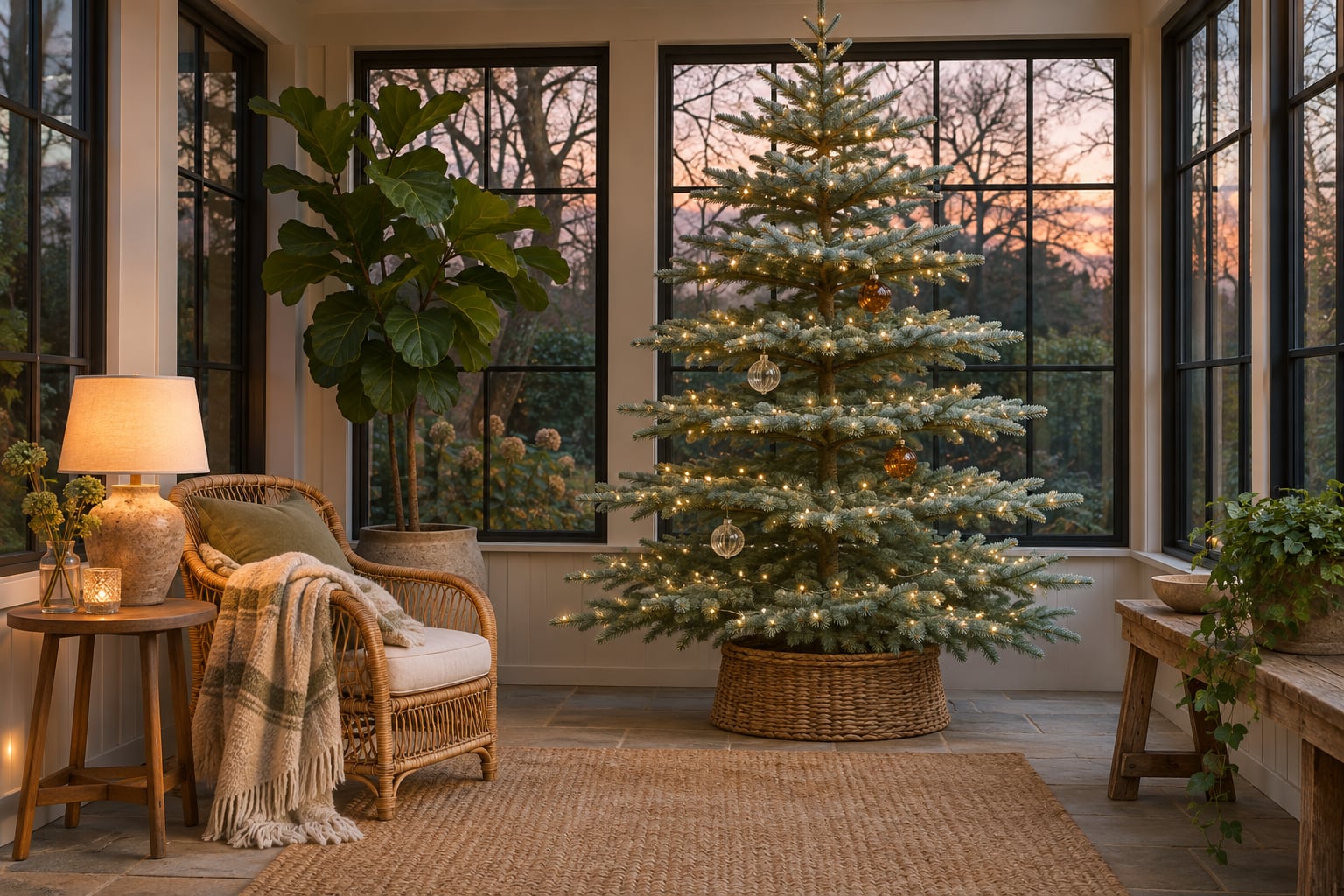
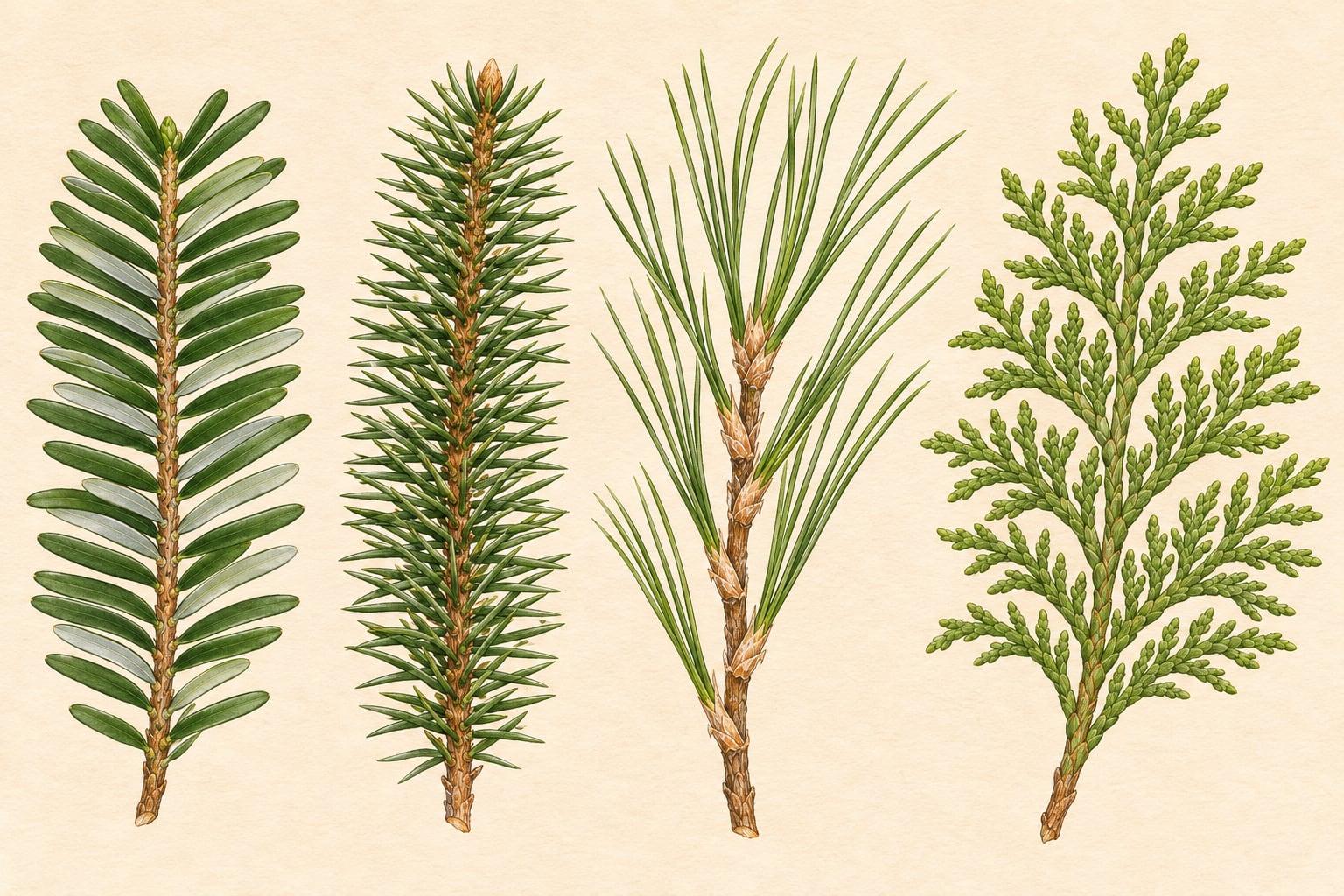
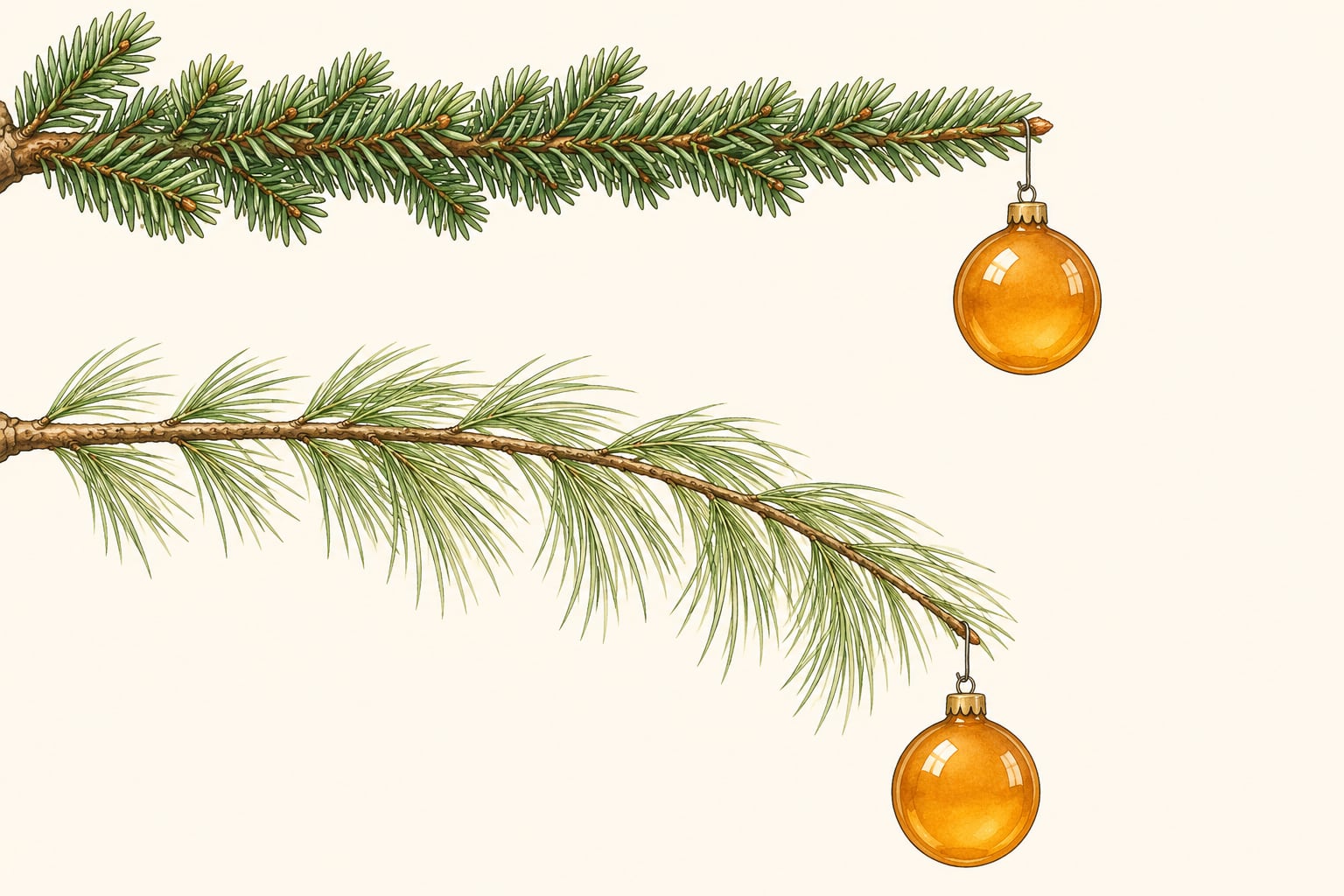
Most Christmas trees come from four groups: firs, spruces, pines, and cypresses. Firs such as Fraser and balsam are the classic soft, full Christmas tree. Spruces have short, four-sided needles on stiff branches. Pines carry their needles in bundles of two, three, or five, and cypresses trade needles for soft, feathery sprays of scales. A single needle is usually enough to tell which one you're looking at.
Artificial trees borrow the same names. Firs are the most common look in our catalog, just ahead of spruces, and most of the high-realism trees we've reviewed are firs. Pine-style trees are mostly classic PVC, and cypress-style trees are an airy, modern look of their own.
How to Tell Fir, Spruce, Pine, and Cypress Apart
Nebraska Extension's evergreen identification guide sorts conifers with three questions about the needles:
- Are the needles in bundles? "If the needles are clustered in groups, you're looking at a pine tree." Pine bundles usually hold two, three, or five needles.
- Does a single needle roll between your fingers? Spruce needles are four-sided, so "if the needle rolls between your fingers as smoothly as a square wheel, it's a spruce." Pull one off and "you'll find a tiny woody peg left behind."
- Is it flat? A needle that "won't roll at all because it's flat" belongs to a fir, or to a yew, which the guide covers as a landscape shrub.
If there are no separate needles at all, just sprays of tiny overlapping scales, you're looking at a cypress or a juniper such as eastern red cedar. The Nebraska guide describes juniper scales as "lapped over one another like the shingles on a roof," and NC State Extension's Leyland cypress guide says that tree's branchlets "are flattened and are held in two or more planes."
Douglas fir is the one that muddies the test. Its needles are soft and flat like a fir's, but the National Christmas Tree Association says they "radiate in all directions from the branch," and Cornell Cooperative Extension's Christmas tree guide points out that it "is not a true fir."
Artificial trees copy these looks mostly through their branch tips. PE (polyethylene) tips are molded from real branches, so they can carry a species' needle shape, while PVC tips are thin strips cut from plastic film. The species name on an artificial tree tells you which look it's going for, and our realism and build guide explains how the two materials compare.
The Main Types at a Glance
The table pulls together the common species. The details come from the Iowa State, Illinois, Nebraska, and NC State extension services, plus Cornell's guide and the National Christmas Tree Association. Take the scent column loosely: Iowa State says aroma "can be highly subjective."
| Tree | Needles | Color | Heavy ornaments | Scent |
|---|---|---|---|---|
| Fraser fir | Flat, soft, ½ to 1 in | Dark green, silvery underneath | Yes, strong branches | Very good |
| Balsam fir | Flat, soft, ¾ to 1½ in | Dark green | Not ideal, branches flex | Excellent |
| Noble fir | Curve upward, about 1 in | Blue-green to dark green, silvery | Yes, short stiff branches | Very good |
| Douglas fir | Soft, all around the twig, 1 to 1½ in | Dark to medium green | Branches can bend | Very good |
| Colorado blue spruce | Stiff, very sharp, 1 to 1½ in | Blue to silvery blue | Yes, stiff branches | Good to fair |
| White spruce | Short, stiff, ½ to ¾ in | Green to bluish green | Yes | Not pleasant |
| Scotch pine | Stiff, about 1 in, in pairs | Green | Yes, stiff branches | Good |
| White pine | Soft, 2½ to 5 in, in fives | Bluish green | No, branches flex | Little |
| Virginia pine | Twisted pairs, 1½ to 3 in | Dark green | Yes, stout branches | Strong |
| Leyland cypress | Flat, feathery scales | Medium green to blue-green | No, flexible limbs | Very little |
| Eastern red cedar | Prickly scales, under ¼ in | Dark green to bronze | No, limber branches | Good, strong |
If you're buying a cut tree, needle retention matters as much as looks. Illinois Extension's rule of thumb: "Typically pine trees have the best needle retention followed by firs, and spruces have the shortest retention." An artificial tree doesn't dry out, so this one is mostly a cut-tree question.
Fir Trees
Firs are what most people picture: soft, flat needles, a deep green color, and a tidy cone. They're also the look we see most on artificial trees. Seventeen of the 48 trees in our catalog carry a fir name, two more than carry a spruce name, and they run from 0% to 100% PE.
Fraser fir
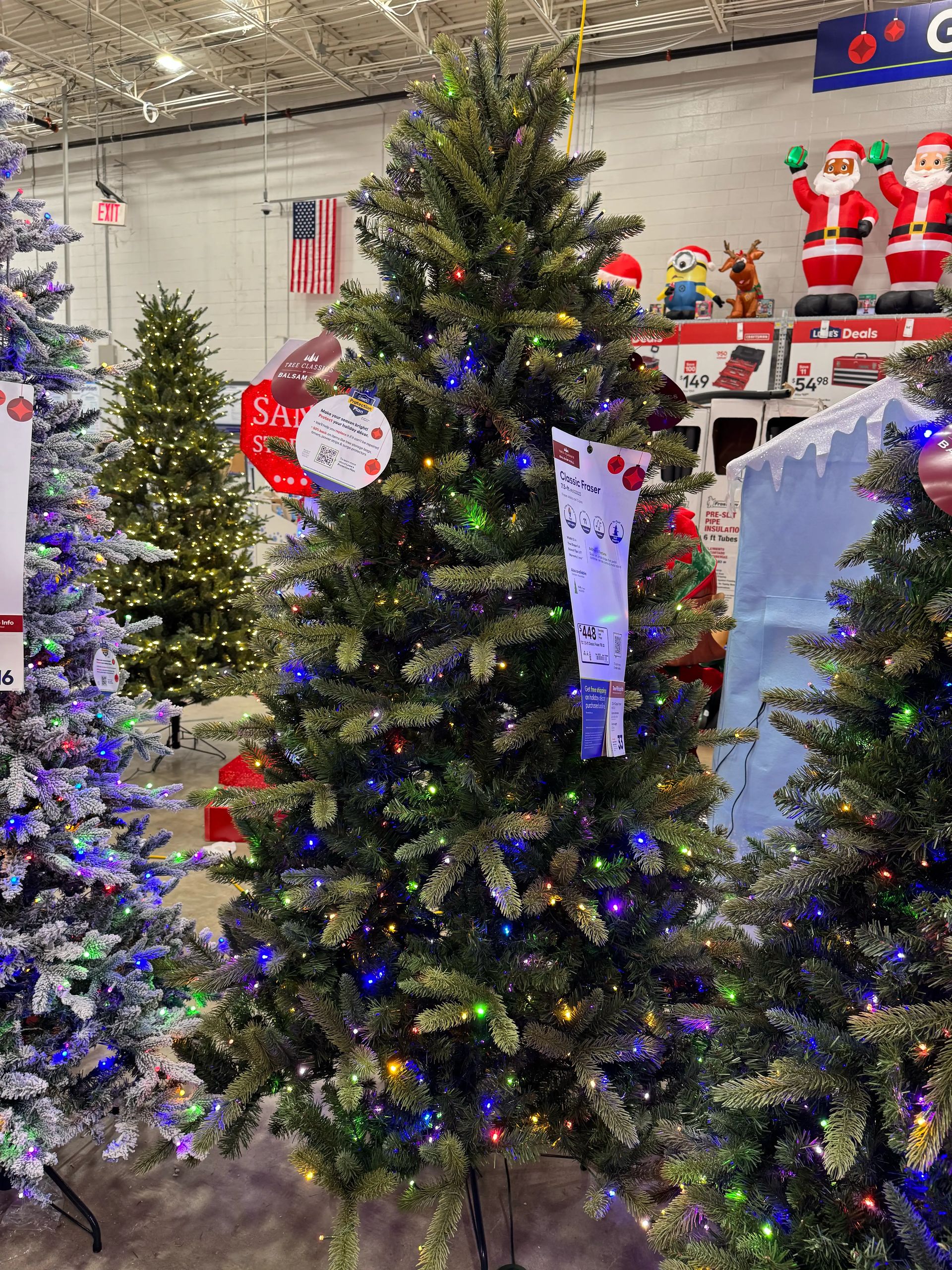
Fraser fir has dark green needles with silvery undersides, on branches that turn slightly upward. NC State Extension calls it "a very attractive Christmas tree species" with "strong branches which easily support heavy ornaments," and Cornell's guide calls it "the most used." Our Classic Fraser Fir review puts that tree at 50% PE, which reads as convincing from across a room. The Breckenridge Downswept Fraser Fir goes to 65% PE, but as the name says, its branches sweep down where a real Fraser's turn slightly up. Its sparser top copies a real tree's taper, which our review expects some buyers to love and others to see as a flaw.
Balsam fir
Balsam looks a lot like Fraser, with flat, dark green needles, and it has the stronger reputation for scent: Iowa State gives its aroma an "excellent," its top rating. Cornell's guide warns that balsam's branches "are flexible so may not be able to hold heavier ornaments," though the trees also run "narrower than average," which helps in a tight spot. Illinois Extension says Fraser holds its needles better, too. Between the two, Fraser is the pick for heavy ornaments, while balsam wins on scent and fits a narrow space.
Artificial balsams don't necessarily keep the narrow shape. The Eastcastle Balsam Fir is a full pear shape, 55 inches across at 7.5 feet, with 69% PE tips slim enough that our review calls them very true to real fir needles.
Noble fir
Noble fir has short, stiff branches and needles about an inch long. The National Christmas Tree Association says the needles "turn upward, exposing the lower branches," and Illinois Extension calls the tree "great for heavier ornaments."
Our Deluxe Noble Fir review found that the molded tips copy that upward sweep closely, in a U or V pattern that "reads as either strikingly realistic or unnaturally uniform, depending on your eye." The review calls that "an aesthetic preference," not a quality problem, and says the blue-green color is "accurate to Noble firs." The Jackson Noble Fir uses wider PE tips for a more traditional noble look, at 40% PE.
Douglas fir
Douglas fir has soft, shiny needles that grow all around the twig and smell sweet when crushed. The branches are softer, too: Iowa State says they "can bend with heavy ornaments." The only Douglas fir we've reviewed, the Montrose Douglas Fir, uses upward-facing PE tips on about 20% of the tree, and our review says that once fluffed, it gets "a wispy, natural look that doesn't feel overly dense or fake."
Grand fir, Nordmann fir, and concolor
A few other firs turn up on lots, and grand fir shows up in artificial lines too. Illinois Extension describes grand fir's "shiny, dark green needles" that give off "a citrusy smell" when crushed, and Nordmann fir's dark green needles that are "silvery-blue below." Concolor, or white fir, is bluish, and Cornell compares it to blue spruce with needles that are "softer and blunt at the end so less spiky." The Elegant Grand Fir is one of two 100% PE trees in our catalog, and our review found its needle texture "noticeably better than mixed PE/PVC alternatives."
Noble Fir vs Fraser Fir
These are the two firs people compare most, and both keep their needles well (Iowa State rates retention "excellent" for each), so the choice is about looks and decorating:
- Color. By Illinois Extension's description, noble is the bluer, more silvery tree and Fraser the darker green. Iowa State's chart sees it the other way around, so if color matters, compare them side by side.
- Shape. Noble tends to grow in more open tiers, and its upturned needles leave more of each branch in view.
- Ornaments. Both hold heavy ones, and Cornell says both have "good spacing" between branches for hanging them.
- Scent. Iowa State rates both "very good," so scent shouldn't decide this one.
If you like ornaments hanging in open layers, go with noble. For the classic Christmas tree, go with Fraser.
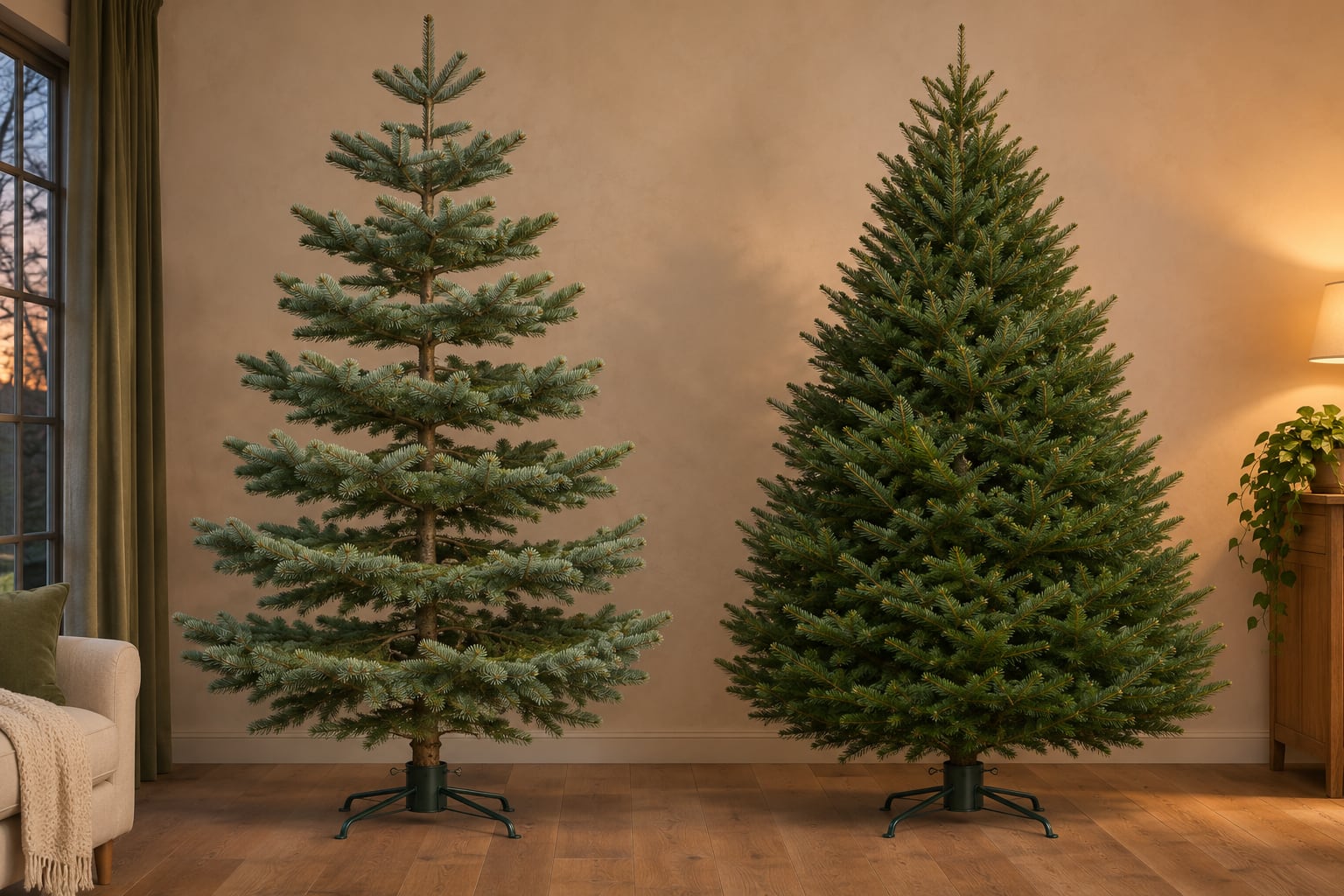
On an artificial tree, the difference shows up mostly in the molded tips and the color. A real noble fir's open layers are part of its charm, but gaps on an artificial tree usually look like a defect: our Deluxe Noble Fir review notes owner reports of gaps in the middle section that fluffing couldn't close.
Spruce Trees
Spruces have short, four-sided needles all around the twig and stiff branches, and they usually grow as neat pyramids. Nebraska Extension calls Colorado spruce a "dense pyramidal tree" with "stiff upright branches." Norway spruce grows the same pyramid, but its smaller branches hang down from the limbs as the tree ages. Colorado blue spruce is the blue one, anywhere from "dull bluish-gray to silvery-blue" in NC State's description, and white spruce, including the varieties sold as Black Hills and Alberta spruce, is green to bluish green with short, blunt needles.
Blue and white spruce both have branches stiff enough for heavy ornaments. As cut trees, though, spruces have drawbacks: blue and Norway spruce needles are sharp enough that Cornell calls them "hard to handle and decorate," many spruces drop needles quickly once they dry out, and Iowa State rates white spruce's scent "not pleasant."
An artificial spruce skips the prickle and won't dry out, though how well it holds ornaments depends on the build. The Vermont White Spruce we tested, the top pick in our most realistic artificial trees roundup, has branches that "angle upward rather than drooping, mimicking a healthy spruce." It's also the only one of our 15 spruce-named trees with at least 50% PE. The GE Colorado Spruce gets its realism elsewhere at 25% PE: short, stiff spruce-style tips on pronounced branch stems that extend from the trunk before the needles begin, the way a real tree's do.
Spruce vs Fir Christmas Trees
For a cut tree, fir usually wins. Its needles are softer, it keeps them longer, and the common firs smell better: Iowa State rates them "very good" or "excellent," against "good to fair" for blue spruce. Spruce wins on stiff branches and, in blue spruce's case, color. Noble and Fraser firs hold heavy ornaments well too, so a spruce is mainly for its color, its look, or your very heaviest pieces.
For an artificial tree, scent and needle drop don't matter, so pick the needles you like. In our reviews, fir-style tips like those on the Yorkshire Fir lean thin and fine, while the GE Colorado Spruce's are short and stiff. Neither style is more realistic by default, so go with the tree you'd pick on a lot.
Pine Trees
Pines are the easiest type to spot, since their needles grow in bundles, but they aren't all long-needled. Scotch pine, a longtime Christmas staple, has stiff needles in pairs, about an inch long in most guides, on stiff branches with room between them for ornaments. White pine is the long one, with soft, bluish green needles 2½ to 5 inches long in bundles of five. It has little scent, and Cornell notes that it "can also appear empty inside since the needles grow at the branches' ends." Virginia pine, popular across the South, grows dense, with twisted pairs of needles and branches NC State calls "stout and woody" and "excellent for holding ornaments."
On the artificial side, most of the pine-style trees we've reviewed are all PVC and aim for the classic artificial-tree look rather than a copy of a real pine. As our Forest Pine review explains, traditional pine trees use "thick bundles of PVC needles at each branch tip rather than trying to create realistic individual needles," which makes them look full. Several of our pine-style trees are flocked or frosted, and one of those, the Snowy Berkshire, does read like the real thing: our review found the pine character shows through the flocking and the tree "actually reads as a pine tree."
Adding PE doesn't automatically make a better pine, either. The Hayden Pine mixes three kinds of tips at 30% PE, and our review found that "the pine needle character gets overwhelmed by all the different textures competing for attention."
Cypress and Red Cedar Trees
Cypresses and junipers such as eastern red cedar don't have needles in the usual sense. Their foliage is sprays of tiny scales. Leyland cypress leads the group: the National Christmas Tree Association calls it "the most popular Christmas tree in the southeast." NC State Extension says heavily sheared Leylands "are extremely dense," but their "flexible limbs will not support large ornaments, and the species has very little fragrance." Arizona cypress adds blue cultivars such as the silvery blue Carolina Sapphire, which has a citrus-like scent. Eastern red cedar, a juniper despite the name, is a traditional Christmas tree in North Carolina, with "prickly foliage" and "limber branches."
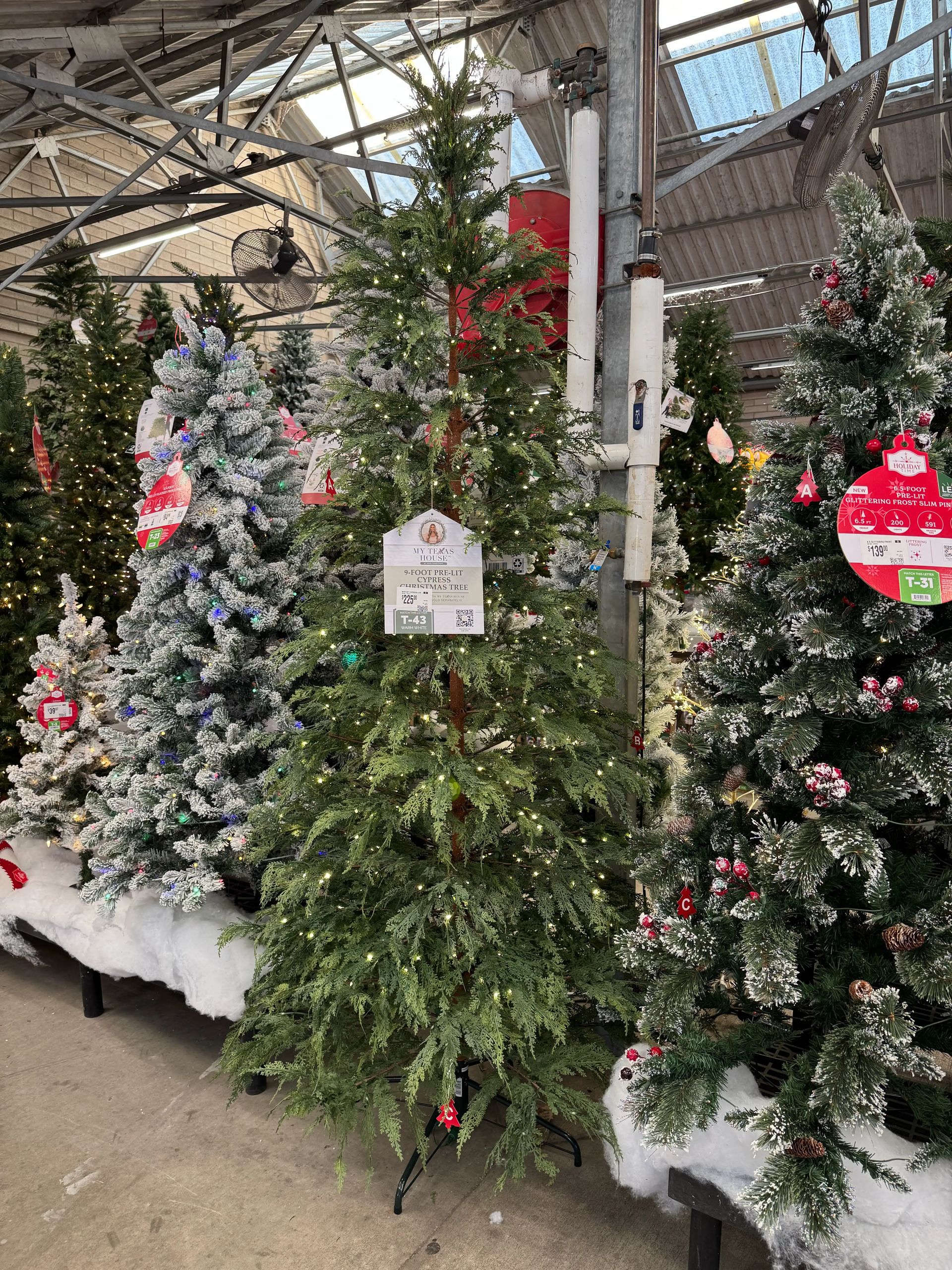
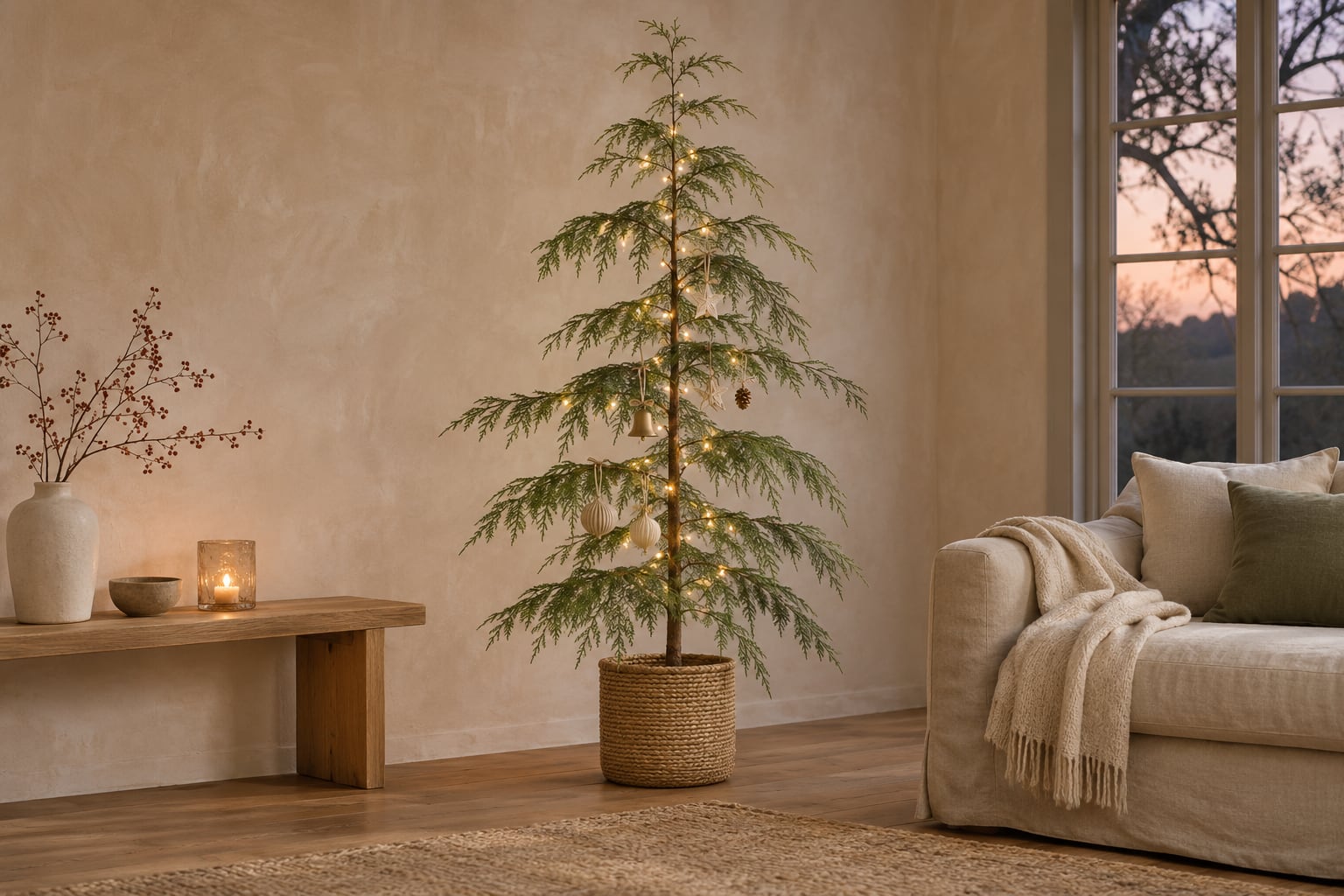
Search for a cypress Christmas tree today, though, and you'll mostly find artificial ones. They go the opposite way from a sheared Leyland: airy, drapey, and modern. The My Texas House Cypress uses 100% PE molded fronds with a natural droop, but only 730 tips at 7.5 feet, and our review says ornaments have to hang near the trunk. The Cedar Cypress from Best Choice Products pairs drapey PE sprays with PVC fillers at 25% PE. Our review found the cypress styling "makes that percentage work harder than it would on a traditional fir or spruce," but the PE branches "can't support ornament weight." Buy either one for the look, with light ornaments or none.
Which Types Hold Heavy Ornaments
On cut trees, the guides cited above point to noble fir, Fraser fir, blue and white spruce, and Virginia and Scotch pine for heavy ornaments. Most of them warn against loading up a white pine, though NC State calls its branches "relatively strong." Balsam fir, Douglas fir, Leyland cypress, and red cedar each get a caution from at least one guide, so on those trees, hang heavy glass close to the trunk.
On an artificial tree, the build decides, not the species on the box. As our realism and build guide puts it, "Heavier ornaments need thicker gauge wire." A few patterns from our reviews:
- Sturdy builds hold weight in fir and spruce styles alike. Our review says the Vermont White Spruce's "strong upward-sloping branches handle heavy ornaments with ease," our roundup says the Eastcastle Balsam Fir's "sturdy construction handles heavy decorations," and our Yorkshire Fir review found its branches sturdier than those on the Grand Duchess Balsam Fir, a sibling tree from the same brand.
- More PE doesn't mean stronger branches. Our review of the 100% PE Elegant Grand Fir says its "branches struggle to support heavier decorations," and its stiff needles make ornaments harder to hang.
- Cypress-style sprays are decorative, not structural. Both cypress-style trees in our catalog need ornaments near the trunk or on sturdier PVC sections.
Choosing a Look for an Artificial Tree
A few starting points:
- The classic full tree: a fir style, such as Fraser or balsam. It has the most high-realism options in our catalog, and four of the six picks in our most realistic artificial trees roundup are firs.
- Heavy or heirloom ornaments: any style whose reviews praise sturdy branches. Skip trees with complaints about drooping.
- Modern and minimal: a cypress style, decorated lightly.
- A pine look: a traditional all-PVC pine for the classic artificial style, or a flocked one for a snowy version.
Whichever look you choose, the tree won't resemble the real thing until its branches are spread out, so set aside time for fluffing. If you're still deciding between a cut tree and an artificial one, our real vs fake comparison covers cost, safety, and the environment.