
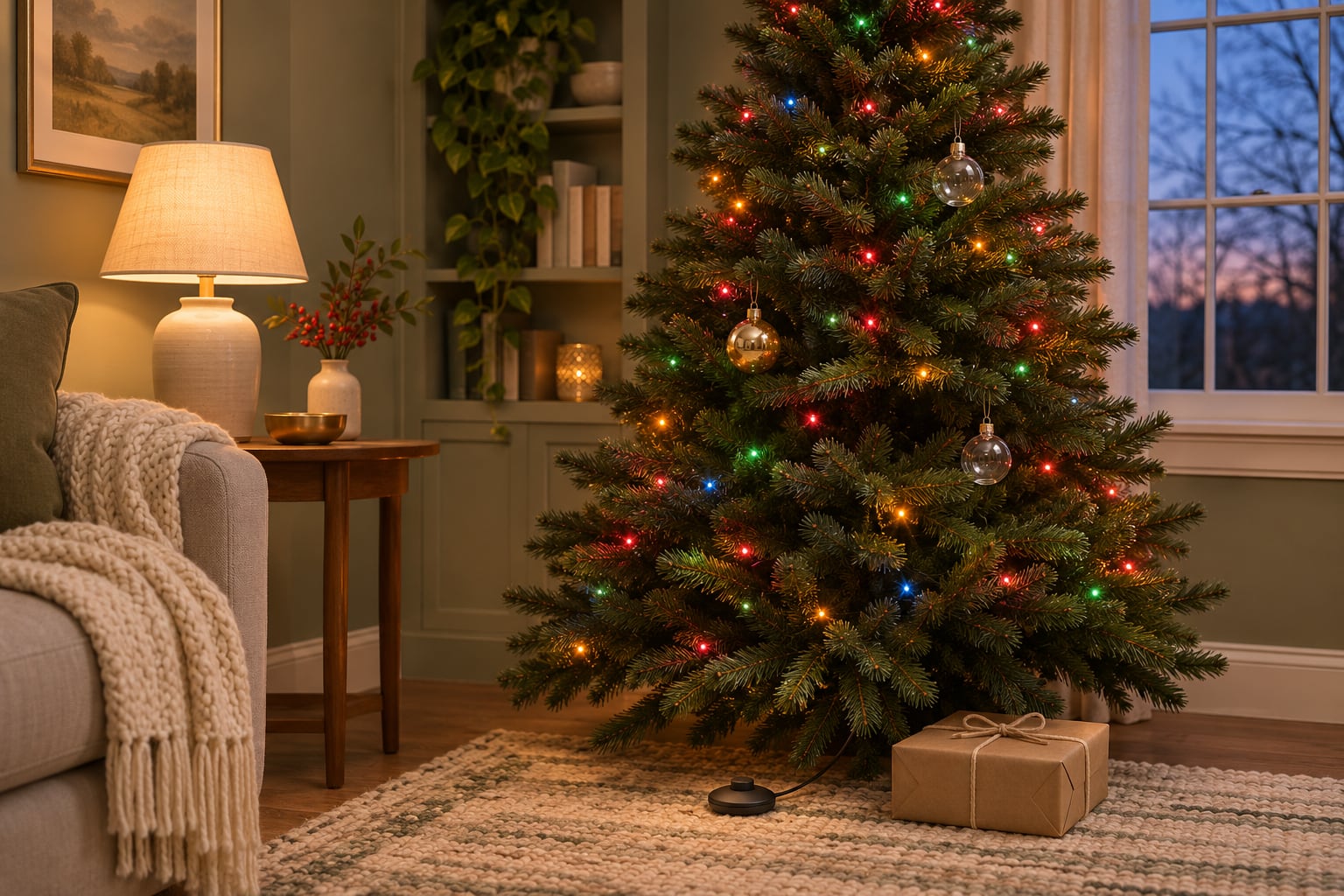
Most of the color-changing Christmas trees in our catalog are dual-color trees. Their built-in LEDs switch between white and multicolor when you press a foot pedal, a remote, or a button on the control box, and most add a handful of effects that fade, twinkle, or flash between the two. For a household split between warm white and colored lights, that's a real compromise, with one condition: the white setting has to be warm enough for whoever wanted warm white, and that varies from tree to tree more than the listings let on.
If someone in the house wants a single color, an all-blue or all-red tree, or effects that chase up the branches, that's a different kind of tree. RGB bulbs mix red, green, and blue into any color, and a tree built with them can do all of that, though the RGB trees in our catalog carry fewer lights than the densest dual-color ones.
Dual-Color or RGB
Listings use "color changing" for both kinds, so the phrase alone won't tell you what you're looking at. "Dual color" or "warm white to multicolor" points to a dual-color tree, and "RGB" or a color wheel on the remote points to RGB. Light names can still mislead: National Tree Company sells a Dunhill Fir with "multicolor, clear Spectrum" lights, and its listing describes 1,200 multicolor and clear lights that simply plug in, with no settings or switch mentioned. The reliable check is the list of light settings. A tree that switches lists steady white and steady multicolor among them, and one that also offers single colors, like all red or all blue, is RGB.
| Dual-color | RGB | |
|---|---|---|
| What each bulb shows | White, or its own fixed color | Any color mixed from red, green, and blue |
| Settings | White, multicolor, and effects between them | Single colors, multicolor, and animated patterns |
| The white | Its own white LED, warm to cool depending on the tree | Usually mixed from red, green, and blue, so it varies by tree |
| Lights on a 7.5 ft tree in our catalog | 300 to 2,250 | 500 to 600 |
Some branded light names are dual-color systems by another name. The Glendale Spruce's LumaDazzle lights switch between clear and multicolor modes from the remote, and Balsam Hill describes its Color + Clear lights as "warm white, color, or both."
Fiber optic trees are a third kind. Balsam Hill's light guide labels its Fiber Optic Light Show "Color-changing," with shifting color that travels along "fine fiber strands." We haven't reviewed one yet, so this guide sticks to dual-color and RGB trees.
How a Dual-Color Bulb Works
Manufacturers don't explain the circuitry. Dual-color listings give a single light count, such as the "700 Dual Color LED lights" on National Tree Company's 7.5-foot Dunhill Fir, and the whole tree switches at once. One owner on a smart-home forum describes their tree as having "each LED with one color and warm white." With the remote's receiver removed, the tree stayed white, and since only two wires run from the receiver to the tree, they assumed it switches colors by reversing the polarity.
When every bulb does both, you get the full light count in either setting. Balsam Hill sums up its Color + Clear lights as "one set of lights, three settings," without "sacrificing full, even light coverage." But each bulb's color is fixed. In multicolor mode a given bulb is always red, or always blue, so the tree can't go all red, and you get whatever color mix the factory chose.
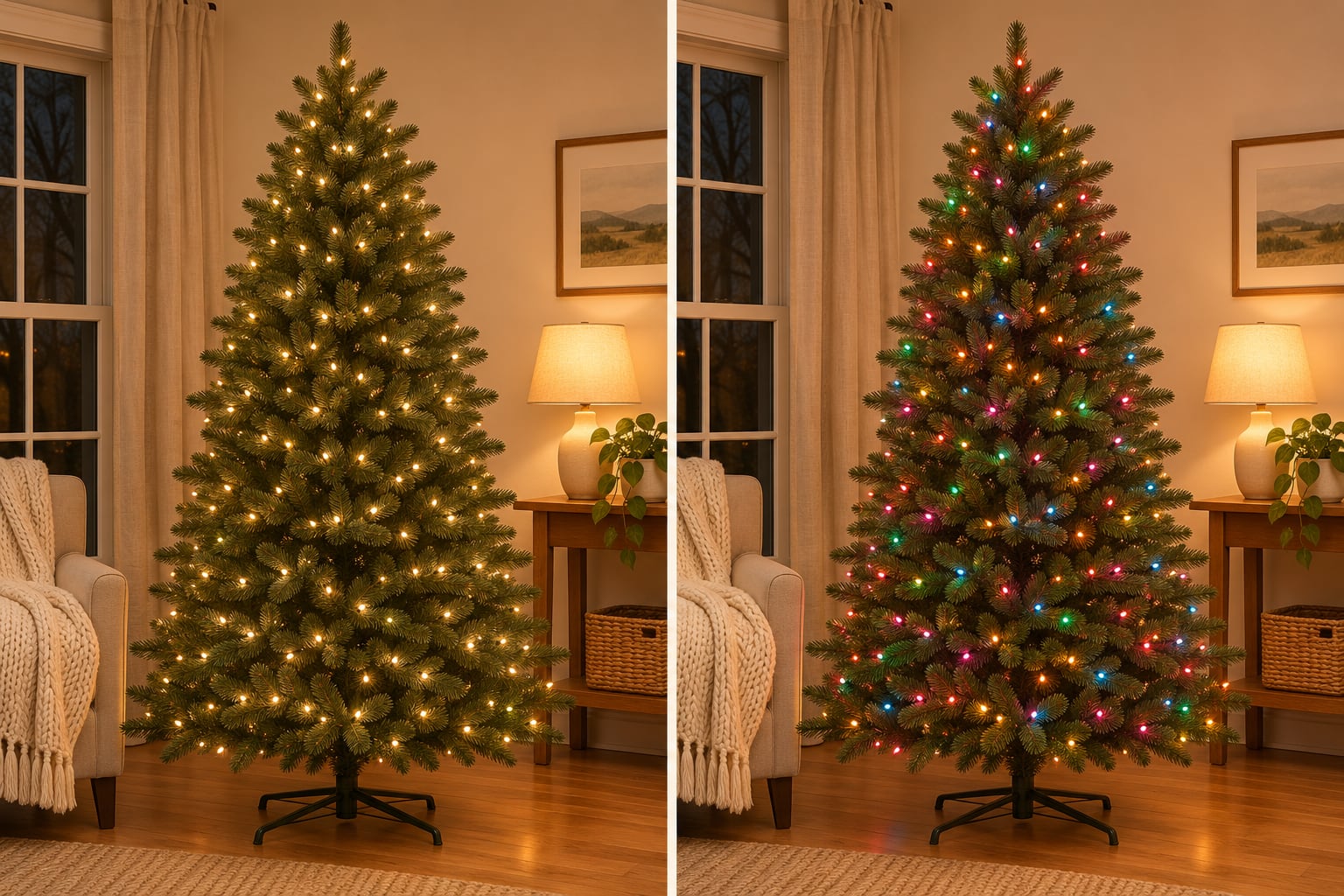
The setting that runs both colors at once is worth a closer look. On the Vermont White Spruce we tested, it switches roughly two in five bulbs to clear while the rest stay colored, for a warmer overall tone. If you think you'll live in the mixed setting, find photos or video of that mode specifically.
Check the White Setting First
The white setting is where dual-color trees differ most. Our lights guide puts warm white at 2,700 to 3,000 K, the soft, golden glow most people picture. Some dual-color trees hit it and some don't:
- Owner reviews of the Yorkshire Fir consistently describe a proper warm white. Our review found its lights warmer than those on its three sibling trees from the same brand, including the Elegant Grand Fir, which comes only in warm white.
- Our earlier review of the Grand Duchess found its white setting cooler than the Yorkshire's.
- On the Vermont White Spruce we tested, the clear setting reads neutral white, even though Balsam Hill's light guide says every clear light "gives off the same warm, candlelit glow." Our Balsam Hill review goes into that gap.
- Some owners of the Frederick Spruce describe its white as a clean, cool tone.
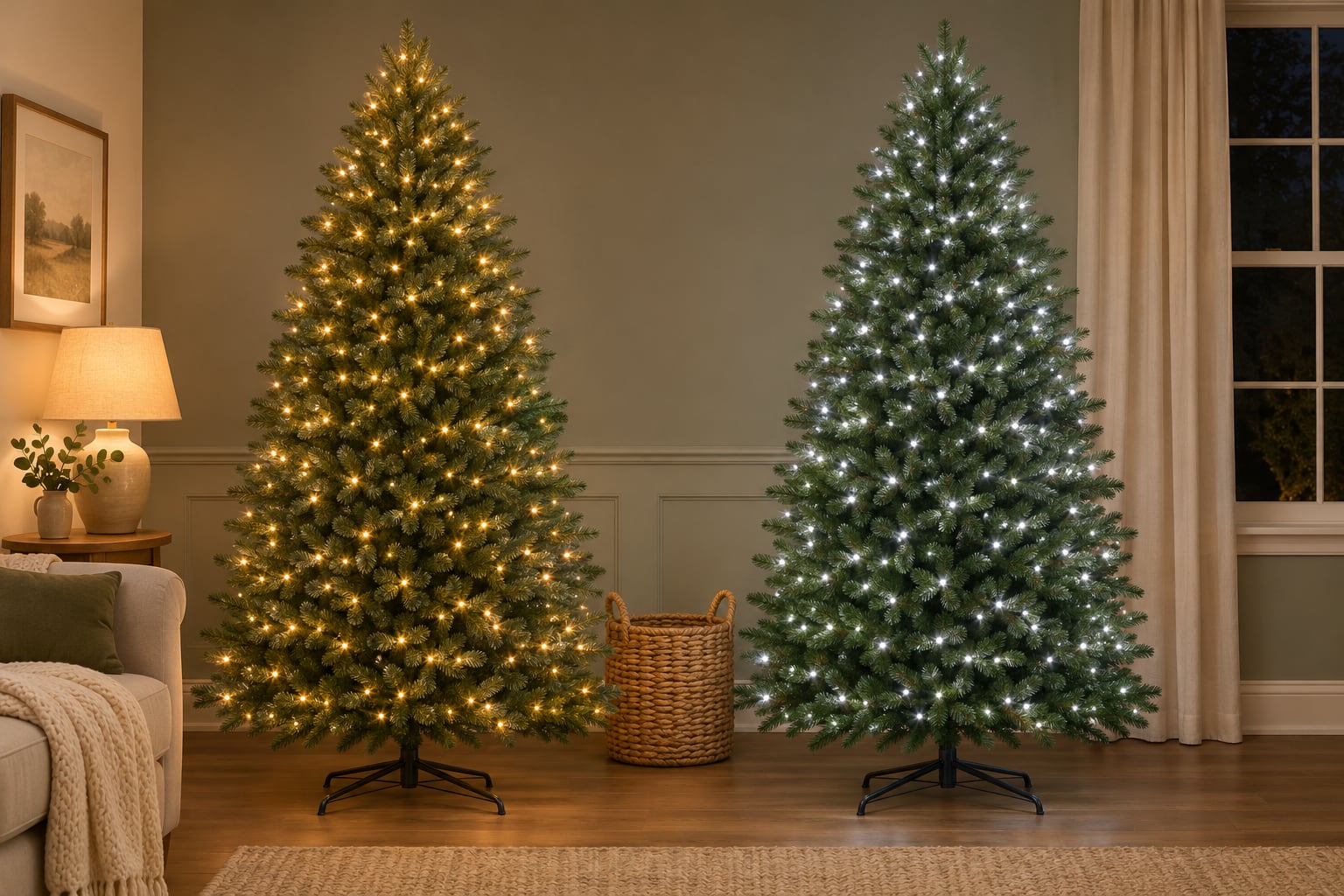
The Yorkshire shows a dual-color tree's white can be warmer than a warm-white-only tree's. Listings rarely give a color temperature, though, and words like "clear" and "warm white" don't settle it. Judge the white from owner photos and video taken at night, not from product photos, and give extra weight to reviews that compare the tree with another one.
The multicolor side varies too. Some owners of the Jackson Noble Fir find that blue dominates its multicolor mode, and the Vermont White Spruce's colors lean slightly cool.
Controls Matter More Than the Mode Count
Listings lead with mode counts of eight, nine, or eleven, but if you settle on one or two settings, what matters is how quickly you can get to them and whether the tree stays there.
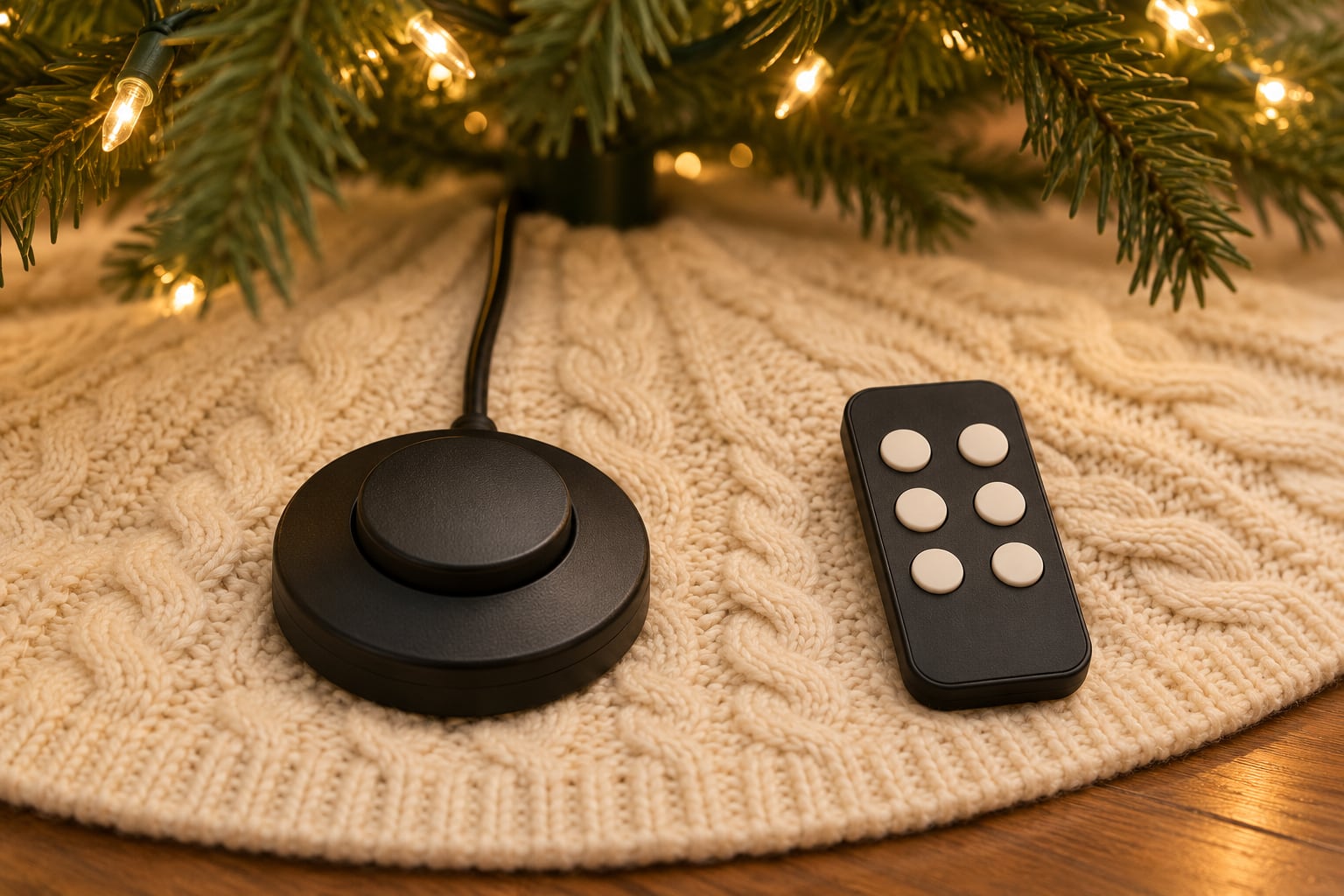
Foot pedal. A pedal cycles through the settings in order, so getting from multicolor back to steady white can mean stepping through several effects first. On some trees it only turns the lights on and off: on the larger Flocked Greensboro trees, you still reach for the control box to change modes.
Remote. A remote with a button for each setting lets you jump straight to the one you want, but some remotes work like a pedal: the forum owner's had a single button that cycled through the settings. A photo of the remote shows which kind you're getting and whether it has brightness buttons. Dimming helps on dense trees. The Yorkshire, the Grand Duchess, and the Philips Balsam Fir carry 2,000 or more lights at 7.5 feet; the Yorkshire dims in five steps and the Philips in four, on steady modes only, though our Yorkshire review notes the lights can still overwhelm a smaller room when dimmed. Our reviews of two trees without a dimmer, the Everett Grand and the Milford Pine, both flag how bright they are.
What happens at power-off. The Melody Spruce comes back on all red every time, with no way to save your color. The forum owner ruled out a smart plug for the same reason: their tree "resets to the flashing white and multi cycle" each time it's turned off and back on. A built-in timer doesn't always get around this. On the warm-white Birchwood Fir, our review found the timer "resets to the default 'combination' setting instead of remembering your preference." Holiday Living's flocked, warm-white Glacier Fir starts in a demo mode that cycles through every effect each time it powers on, and locking in a mode means holding the pedal for 15 seconds, which our review notes you'd repeat daily on a smart plug or timer. If you plan to run a tree on a schedule, look for owner reviews or a manual that say it remembers its last setting.
Apps are turning up on dual-color trees too: the current Grand Duchess adds one for brightness and scheduling, with the remote and pedal still in the box.
Mode names don't promise much, either. Our Milford Pine review notes that its lights cycle through all the modes rather than staying on one, and describes a twinkle setting that blinks every light at once, more like a strobe than a twinkle.
Dual-Color Trees Worth a Look
Scores, specs, and current availability are on each review.
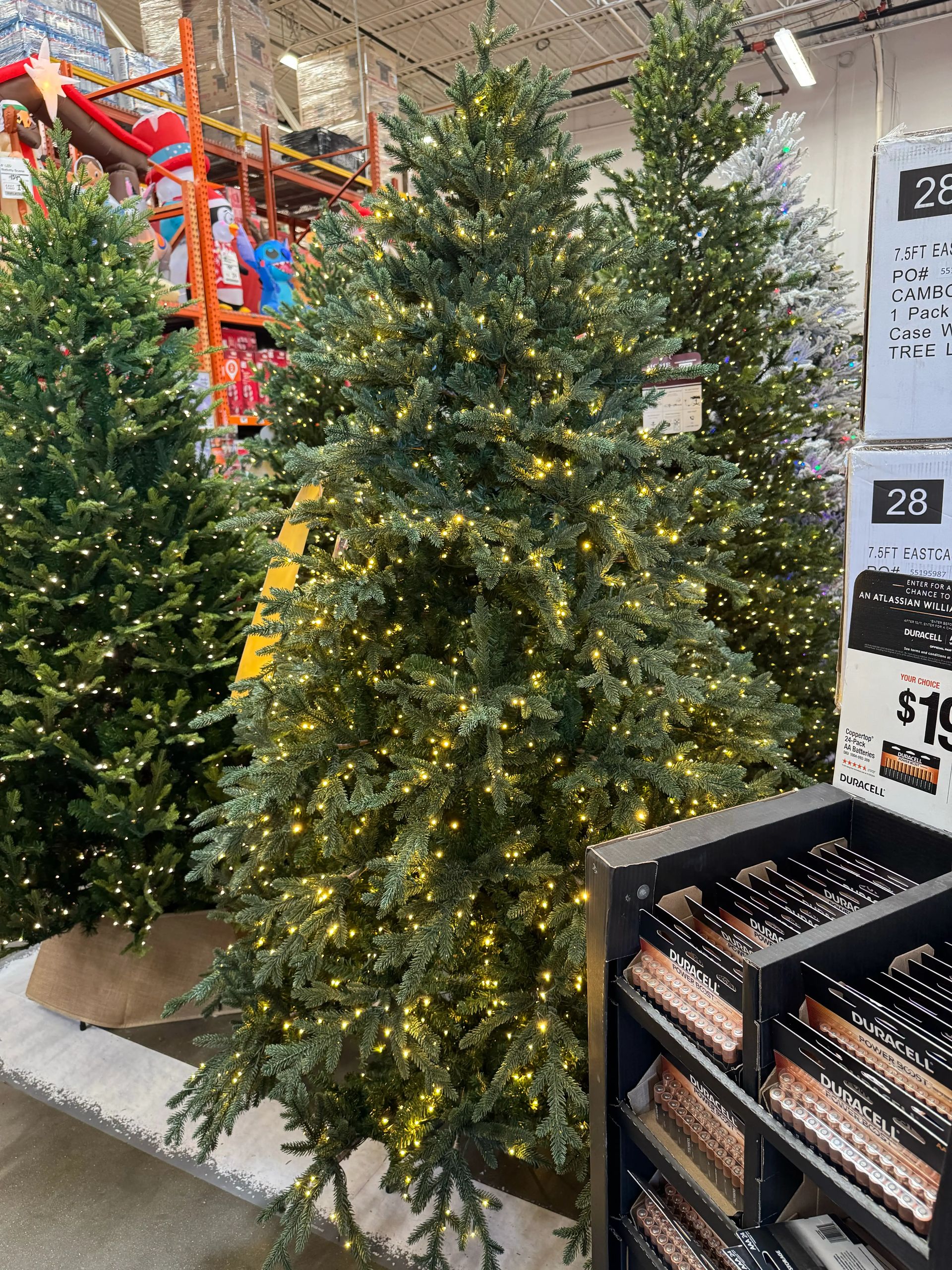
The Yorkshire Fir is the pick if warm white is the setting you'll use most. It pairs 69% PE needles with 2,000 micro LEDs, a remote, a foot pedal, a timer, and five-step dimming, and the multicolor setting is there when someone asks for color. Our review notes that most buyers seem to ignore it.
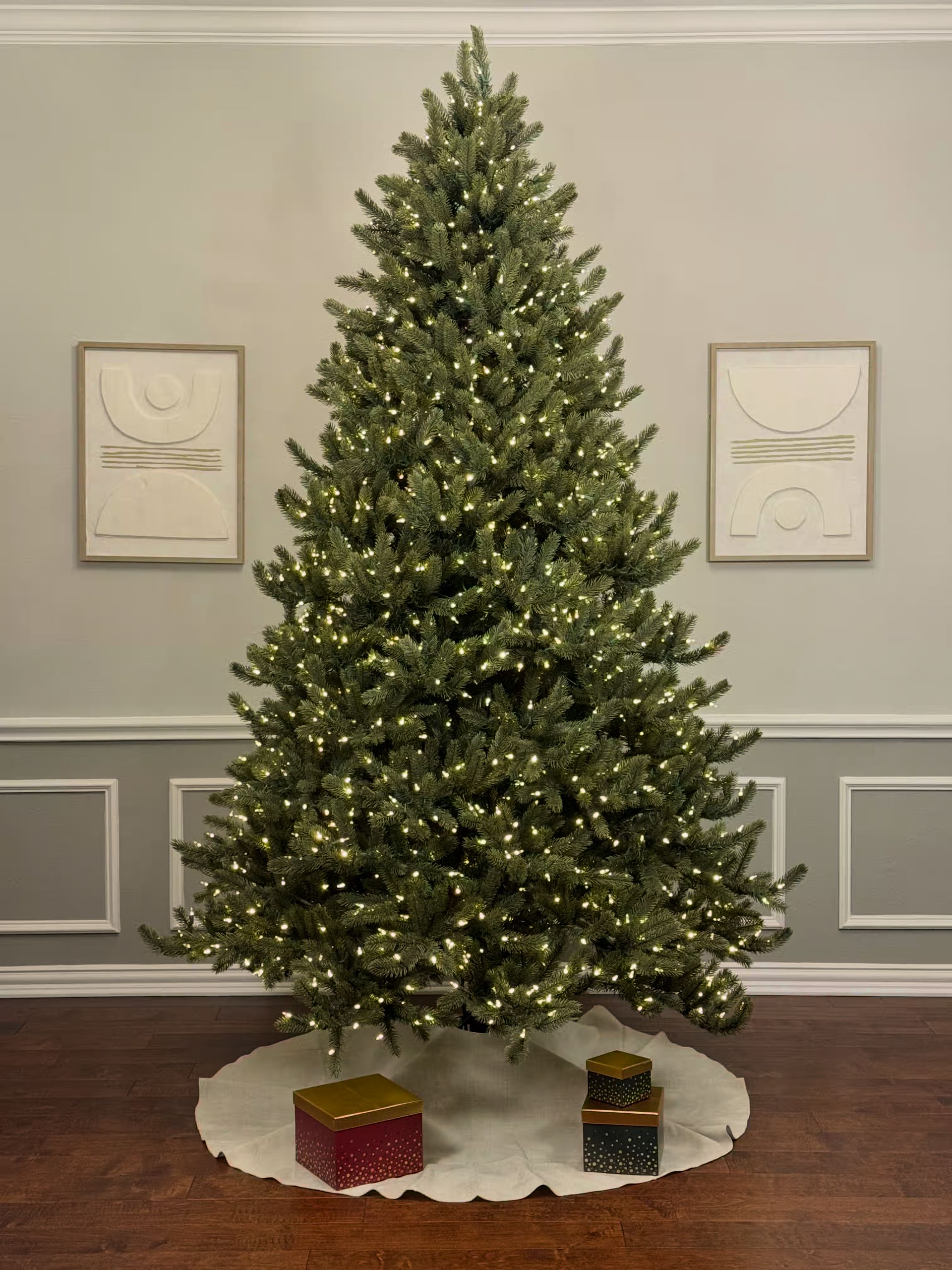
The Vermont White Spruce is the premium option, with 70% PE needles, 1,440 Color + Clear LEDs at 7.5 feet, and dimming from both the remote and the pedal. Go in expecting a neutral white rather than a warm one.
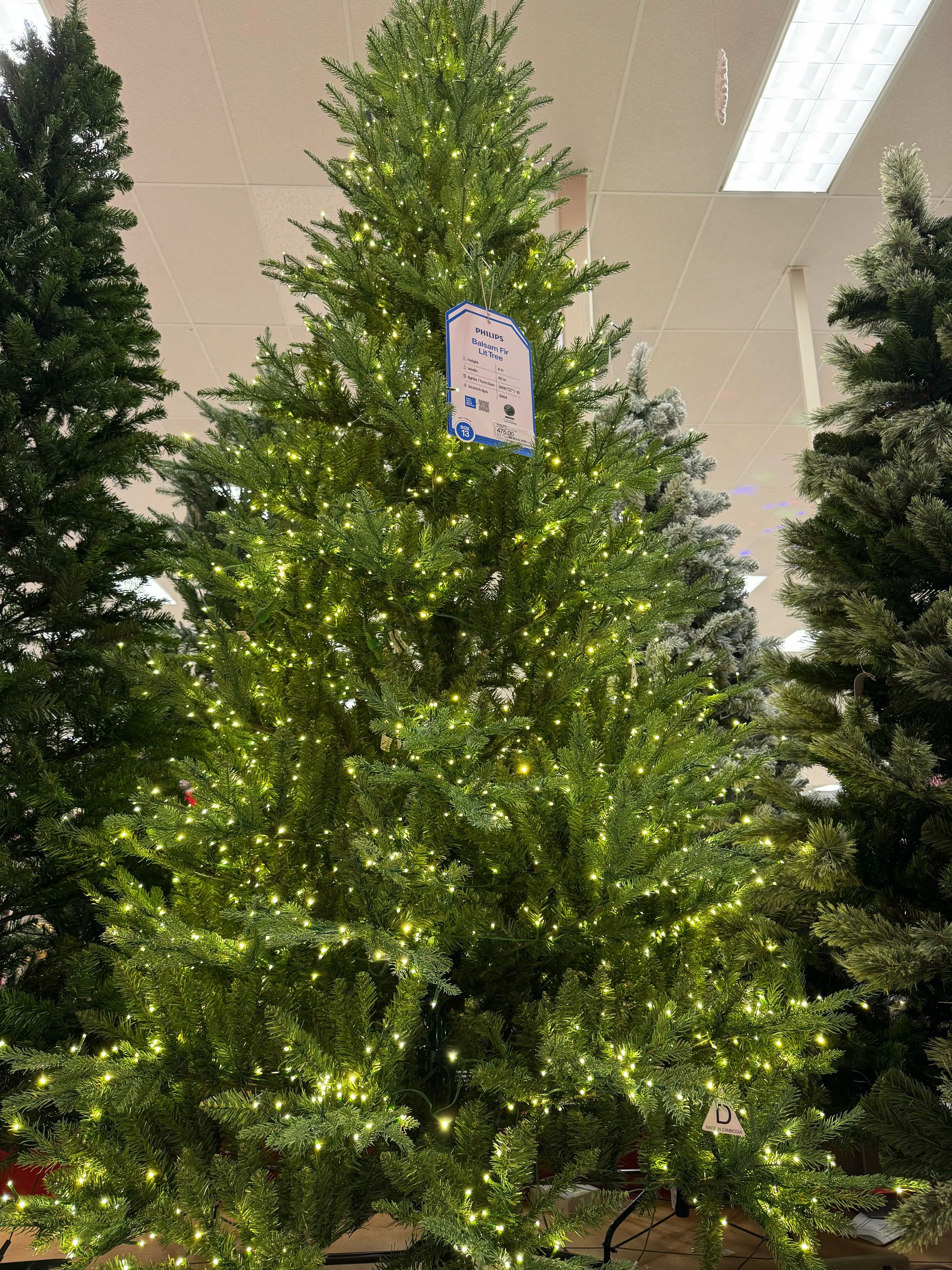
The Philips Balsam Fir is built around its lights: 2,000 dual-color micro LEDs at 7.5 feet, four-step dimming, a six-hour timer, a remote, and a foot pedal. The foliage is the weak point, at only about 20% PE.
The Classic Fraser Fir covers more sizes, from 4.5 to 12 feet, with dual-color or clear lights and 50% PE needles. The current 7.5-foot version adds a remote for its 11 effects, and its pedal now just turns the lights on and off. The Willow Creek Spruce is the budget-friendly option, with a remote, a pedal, a timer, 600 mini LEDs, and only 15% PE.
When an RGB Tree Makes More Sense
Pick RGB if you want one color at a time or patterns that move. The Melody Spruce offers 12 color options, including single colors like warm white, preset combinations, and multicolor, plus 10 light patterns and shows synced to preset songs. Its multicolor mode comes in bands of solid color rather than the usual random mix. Balsam Hill's Twinkly Light Show trees promise "hundreds of effects and any color you want, controlled from your phone."
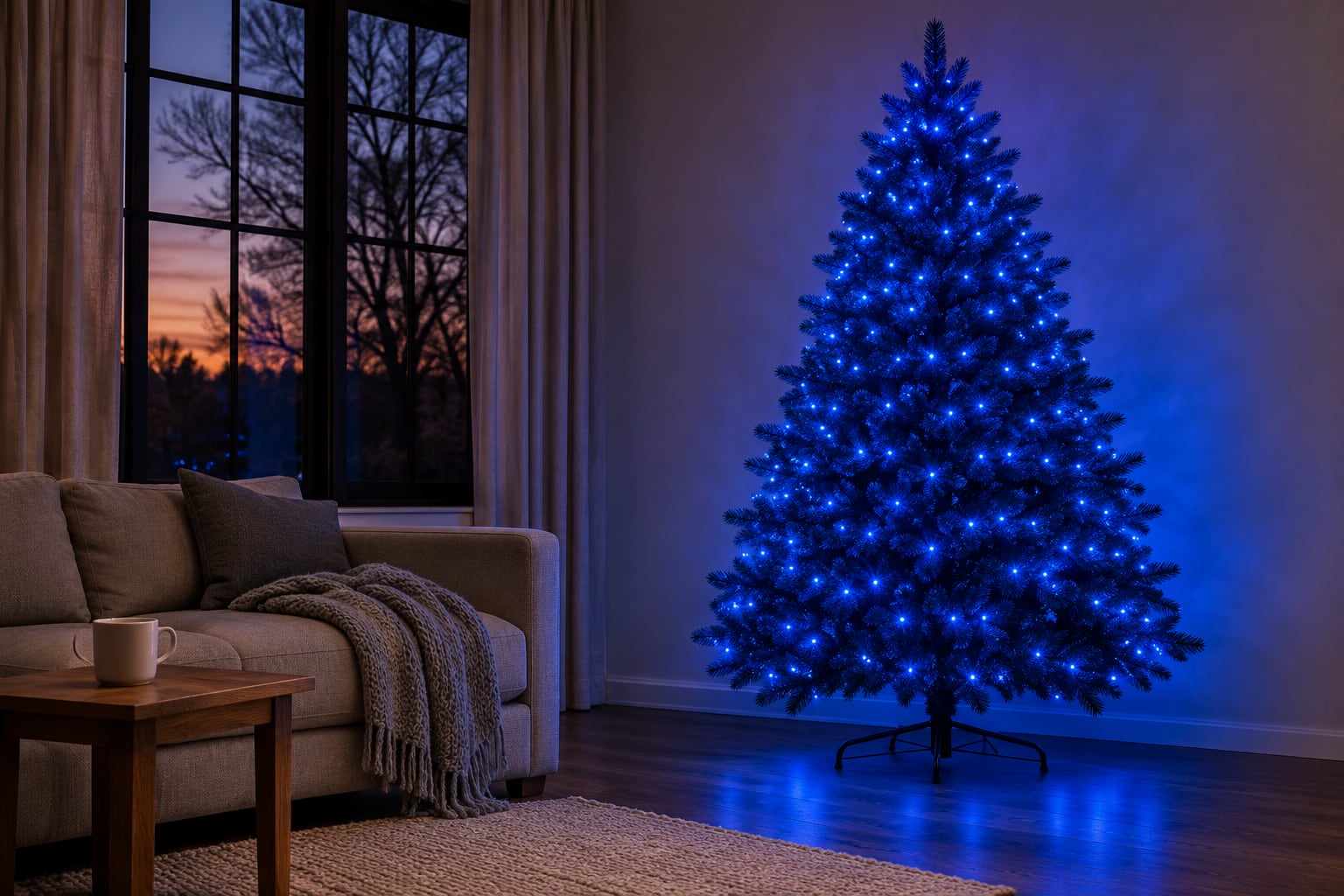
RGB trees in our catalog carry 500 to 600 lights at 7.5 feet, against 2,000 or more on the densest dual-color trees, and our 7.5-foot tree roundup says the Melody's 500 look sparse when the lights hold still. The white is the other question. Most RGB bulbs make white by mixing red, green, and blue, and as our lights guide notes, how convincing that white looks varies by tree. Some RGB lights add a separate white LED, usually sold as RGBW, which is worth looking for if the white matters to you. Either way, the same night-photo check applies.
Who Doesn't Need a Dual-Color Tree
- Households that will only ever use white. Dual-color shouldn't sway you either way. Compare warm-white and dual-color trees on their white alone.
- Anyone who wants a single-color tree. Dual-color bulbs can't do it. Look at RGB trees, or string single-color lights on an unlit tree.
- People who want a completely different look each year. An unlit tree lets you swap strands whenever you like, as our pre-lit vs unlit comparison explains.
Color-Changing Tree Questions
Can a dual-color Christmas tree be set to one color?
Only to white. Each bulb in a dual-color tree shows white or one fixed color, so the settings are all white, the full color mix, and effects between the two. For a tree that's all red or all blue, look at an RGB tree with color selection, such as the Melody Spruce, or string single-color lights on an unlit tree.
Are clear lights the same as warm white?
Not always. Balsam Hill says every clear light, LED or incandescent, gives off "the same warm, candlelit glow," but the clear setting on the Vermont White Spruce we tested reads neutral white. On any tree, treat "clear" and "white" as unconfirmed until owner photos taken at night show the color.
Do color-changing Christmas trees have fewer lights?
Dual-color trees generally don't. When each bulb shows both its white and its color, the full count lights in either setting. RGB trees in our catalog do run lighter, with 500 to 600 lights at 7.5 feet, compared with up to 2,250 on dual-color trees.
Are color-changing Christmas trees worth it?
Yes, if your household will actually use both settings and the white setting is warm enough for you. Check night photos of the white setting, favor a remote with separate buttons and dimming over a long list of modes, and look for reviews or a manual that say the tree remembers its setting after power-off. If you'd only ever use white, judge it on its white alongside warm-white trees.